
Intermodal and Drayage Trucking Insurance

8:30am - 5:00pm Mon-Fri
We'll Reply in 15min*
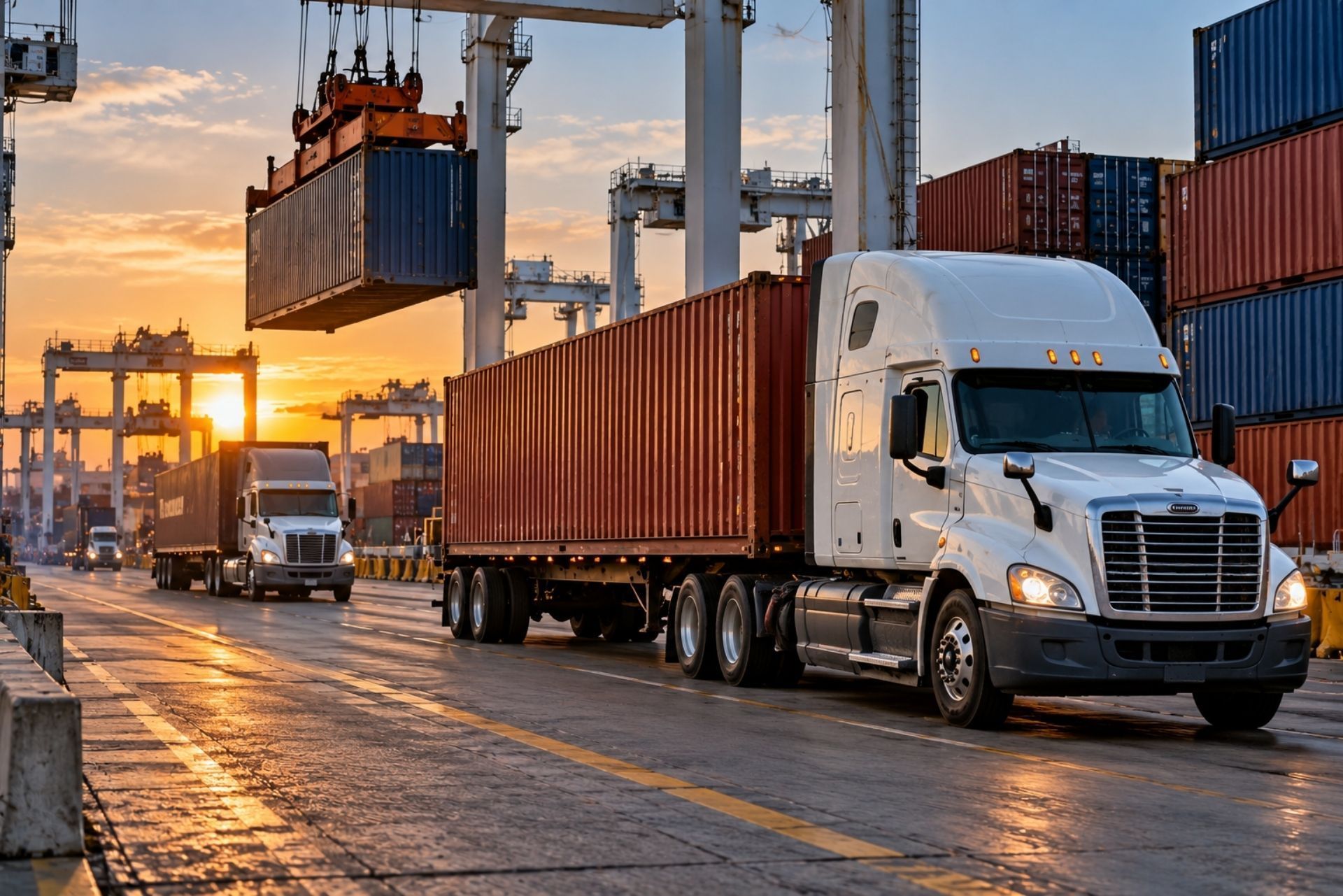
Pulling a container from a port terminal and delivering it to a rail yard 30 miles away sounds simple enough. But the insurance exposures packed into that short trip are anything but simple. You're hauling someone else's cargo, on someone else's chassis, through congested port zones with strict entry requirements, and your
standard commercial auto policy likely has gaps wide enough to lose a $200,000 load through. Intermodal and
drayage trucking insurance covers a specific web of risks:
primary liability, trailer interchange, motor truck cargo,
physical damage, and the compliance hoops that ports and railroads demand before you can even pick up a box. If you're running a drayage operation or thinking about starting one, understanding these coverages isn't optional. It's the difference between staying in business after a claim and watching your authority go dark. This guide breaks down each coverage type, what drives your costs, and the
compliance standards you'll need to meet, so you can build a policy that actually protects your operation.
Understanding Intermodal and Drayage Risk Factors
Drayage trucking occupies a strange middle ground in the freight world. You're covering short distances, sometimes under 50 miles, but you're doing it in some of the most dangerous operating environments in transportation. Port terminals, rail yards, and congested urban corridors around logistics hubs create a concentration of risk that long-haul carriers rarely face.
The frequency of stops, turns, and backing maneuvers is far higher per mile than over-the-road work. You're constantly hooking and unhooking chassis you don't own, working around heavy equipment, and sharing tight spaces with other trucks, yard hostlers, and container-handling cranes. One miscalculation during a chassis pickup can result in a dropped container worth six figures.
The Unique Challenges of Short-Haul Port Logistics
Port zones have their own ecosystems. Speed limits are low, but accident severity can be high because of the equipment involved. Tire blowouts on loaded chassis, jackknifes during tight turns, and collisions at terminal gates are common claim scenarios we see repeatedly. Cargo damage from improper securement or chassis defects adds another layer.
Your exposure per mile is much higher than a carrier running interstate loads on open highway. Underwriters know this, and they price drayage policies accordingly. If you're running in and out of major port complexes like Long Beach, Savannah, or Charleston, expect your insurer to ask detailed questions about which terminals you service and how many turns you make per day.
UIIA Requirements and Compliance Standards
The Uniform Intermodal Interchange and Facilities Access Agreement, or UIIA, is the contract that governs how motor carriers, steamship lines, and equipment providers exchange intermodal equipment. If you want to pick up or drop off containers and chassis at most major rail and port facilities, you need to be a UIIA participant.
UIIA participation requires you to carry specific insurance minimums, including trailer interchange coverage, which we'll cover in detail below. The agreement also outlines your liability for damage to intermodal equipment while it's in your possession. Failing to maintain UIIA compliance can get you locked out of terminals, and that effectively shuts down your operation. Keep in mind that the FMCSA
replaced its legacy registration portal with the Motus system in May 2026, which has created
administrative delays including support wait times of 45 to 60 days for some carriers. If your registration or authority status gets tangled up in that system, your UIIA standing can be affected too.

By: Andy Roy
Owner & Agent
Essential Coverage Types for Drayage Carriers
A drayage insurance program isn't a single policy. It's a stack of coverages, each addressing a different piece of your risk profile. Miss one, and you've got a gap that could cost you everything.
Non-Trucking Liability vs. Primary Auto Liability
Primary auto liability is the foundation. It covers bodily injury and property damage you cause while operating your truck. Under 49 CFR § 387.9, the FMCSA requires a minimum of $750,000 for property carriers, though most contracts and port authorities demand $1 million.
Non-trucking liability, sometimes called bobtail coverage, only applies when you're not under dispatch. If you're driving your truck to get dinner after dropping a load, non-trucking liability kicks in. But here's the mistake we see constantly: owner-operators leased to a carrier assume their carrier's policy covers them at all times. It doesn't. When you're off-duty or between loads, you need your own coverage. Confusing these two is one of the fastest ways to end up personally liable after an accident.
Trailer Interchange Insurance Explained
This is the coverage that catches most new drayage operators off guard. Trailer interchange insurance covers physical damage to chassis and containers that you don't own but are pulling under an interchange agreement, typically governed by the UIIA.
If you damage a chassis while it's in your possession, whether from a collision, a rollover, or even theft, you're responsible. Standard commercial auto policies exclude non-owned trailers. Without trailer interchange coverage, you're paying out of pocket for a chassis. UIIA participants are generally required to carry this coverage, and insurance providers currently recommend a $30,000 limit to ensure compliance with all major Equipment Providers.
Motor Truck Cargo and Inland Marine Protection
Motor truck cargo insurance protects the freight you're hauling. If a container is damaged, stolen, or destroyed while in your care, this policy responds. Most shippers and brokers require cargo coverage, often with limits that vary depending on commodity type.
Inland marine coverage can extend protection to goods in transit that don't fit neatly under a standard cargo policy. For drayage operators hauling high-value electronics or temperature-sensitive goods, cargo coverage limits and exclusions deserve careful review. A $100,000 policy won't help much if you're hauling a container of consumer electronics worth $500,000.
Comparing Standard vs. Specialized Intermodal Policies
A generic commercial trucking policy and a drayage-specific program look similar on the surface, but the differences matter when claims happen. Standard policies are built for long-haul or regional carriers. They often exclude or limit coverage for the specific exposures drayage operators face daily.
Comparison Table: Standard Auto vs. Drayage Endorsements
| Coverage Feature | Standard Commercial Auto | Drayage/Intermodal Policy |
|---|---|---|
| Primary Auto Liability | Included | Included |
| Trailer Interchange | Typically excluded | Included or available as endorsement |
| Non-Owned Chassis Damage | Excluded | Covered under interchange endorsement |
| Motor Truck Cargo | Separate policy required | Often bundled or coordinated |
| Port/Terminal Coverage | May have exclusions for terminal zones | Designed for port operations |
| UIIA Compliance | Not addressed | Policy structured to meet UIIA requirements |
| Pollution Liability (container spills) | Usually excluded | Available as endorsement |
The real danger is assuming a standard policy will work. We've seen drayage carriers file claims for chassis damage only to discover their policy specifically excludes equipment obtained under an interchange agreement. By then, you're writing a check yourself.
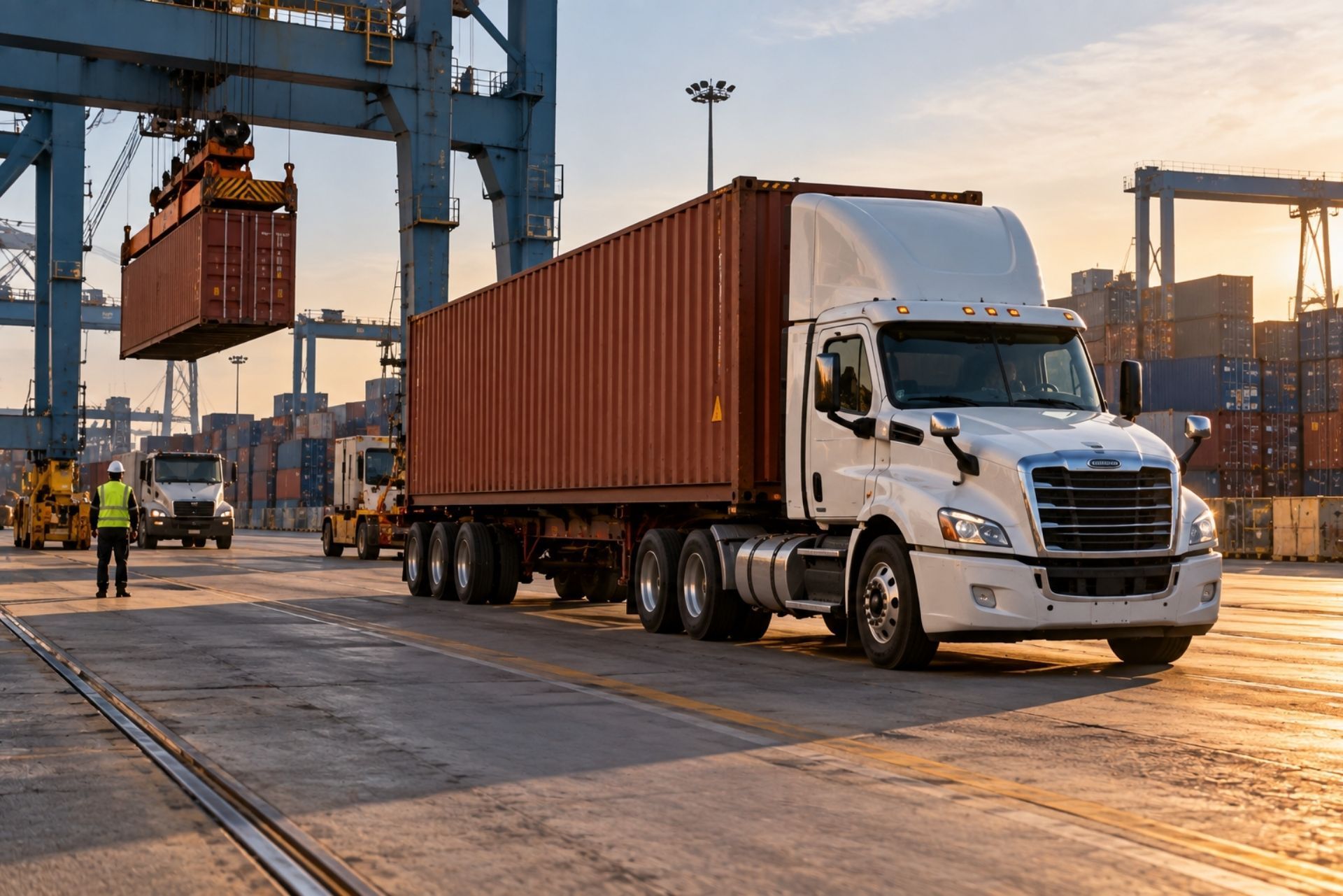
Insurance pricing for drayage operations depends on a handful of variables, and understanding them gives you some control over what you pay. New authorities face the steepest hill: liability and cargo coverage alone can run $8,000 to $15,000 for carriers just entering the market. That number comes down as you build history, but only if you manage your risk factors well.
Physical damage coverage for your power unit adds another layer. Premiums for semi-trucks in 2026 typically fall between $1,500 and $4,000 or more per unit annually, often calculated as a percentage of the truck's value. Rising repair costs are a big driver here. Modern trucks carry more technology than ever, which increases both repair costs and downtime after an accident.
Operating Radius and Terminal Locations
Where you operate matters as much as how far you drive. A carrier running exclusively between the Port of Charleston and nearby distribution centers has a different risk profile than one servicing multiple terminals across the Northeast. Ports like Charleston require carriers to register with the Go!Port system and enroll in specific chassis programs before accessing terminal equipment, and each port's requirements can influence your insurance needs.
Carriers operating within a tight radius around a single port may qualify for lower premiums because their exposure is more predictable. Running between multiple port complexes across state lines increases your premium because it adds jurisdictional complexity and more miles on congested roads.
Safety Scores and Driver MVR Impact
Your CSA scores and individual driver motor vehicle records are the single biggest controllable factor in your premium. Underwriters pull your SAFER data and review every driver's MVR before quoting. A clean safety record with no serious violations can save you thousands annually. One driver with a DUI or multiple moving violations can spike your entire fleet's premium.
Investing in dashcams, regular safety training, and pre-trip inspection documentation pays for itself at renewal time. Carriers who can demonstrate a proactive safety culture, not just the absence of accidents, tend to get better rates and more options from underwriters.
Frequently Asked Questions About Intermodal Insurance
What does UIIA stand for and why do I need it?
UIIA stands for Uniform Intermodal Interchange and Facilities Access Agreement. It's the standard contract between motor carriers, ocean carriers, and equipment providers that governs who's responsible for intermodal equipment. Without UIIA participation, most major rail terminals and port facilities won't let you pick up or return containers and chassis.
Does my regular commercial truck policy cover port work?
Usually not fully. Standard commercial auto policies often exclude or limit coverage for operations inside port terminals and for non-owned equipment like interchange chassis. You'll need drayage-specific endorsements or a specialized intermodal policy to close those gaps.
How much cargo insurance do I need for intermodal loads?
Most contracts require a minimum level of cargo coverage, but higher limits are increasingly standard for intermodal freight. If you're hauling high-value commodities, your shipper or broker may require even more. Review your contracts carefully because being underinsured on cargo is a fast way to lose a customer and absorb a devastating claim.
Is trailer interchange the same as non-owned trailer coverage?
They're related but not identical. Trailer interchange insurance specifically covers equipment exchanged under a written interchange agreement, like the UIIA. Non-owned trailer coverage may apply to trailers you borrow or rent outside of a formal interchange. For drayage work, trailer interchange is the coverage you need, and it's what the UIIA requires.
Before You Buy a Policy
Getting your intermodal and drayage insurance right takes more than picking the cheapest quote. You need a program that addresses primary liability, trailer interchange, cargo protection, physical damage, and the specific compliance demands of every port and rail terminal you service. A gap in any one of these areas can turn a routine fender-bender or a dropped container into a business-ending event.
Start by working with an agent or broker who specializes in trucking, specifically intermodal operations. A generalist commercial insurance agent may not understand UIIA requirements or the nuances of port-specific mandates. Get at least three quotes, compare not just price but coverage terms, and read the exclusions carefully.
Your next step should be reviewing your current policy against the coverage types outlined here. If you spot gaps, especially around trailer interchange or cargo limits, address them before your next terminal run. The cost of proper coverage is always less than the cost of being uninsured when a claim hits.
About The Author: Andy Roy
As Owner and Agent at Pure Risk Advisors, I’ve spent over three decades helping clients find reliable, affordable coverage they can count on. Licensed in Arizona, Colorado, and Wyoming, I take pride in offering personalized service and practical solutions that fit each client’s unique needs—backed by years of experience and a genuine commitment to my community.
Your Personal Insurance Solutions in Colorado
Our team of experts is dedicated to understanding your unique needs and crafting tailored insurance solutions to safeguard your most valued assets, providing you with the confidence and peace of mind you deserve.
3R Personal Insurance Agency
Why Work With 3R Insurance
Choose 3R Insurance and unlock a world of personalized, expert-driven insurance solutions tailored to protect what matters most to you. Experience unparalleled choice, transparency, and ongoing support as our dedicated agents guide you through your insurance journey, ensuring you receive the best coverage at competitive prices.

Choice & Transparency
At 3R Insurance, our independent agents set themselves apart from traditional insurance company agents by working for you, not the insurer. As independent agents, they have the flexibility to offer a diverse range of policies tailored to your unique needs.

Your Advocate
Our independent agents are committed to providing the best coverage suited for your individual requirements. They work diligently to align your insurance needs with your budget, ensuring you receive top-quality coverage at an affordable price.
Lifetime Expert Advice
With a wealth of industry knowledge, our independent insurance agents are true experts, capable of clarifying complex policies and rate changes. Their extensive experience with multiple insurance providers makes them reliable sources of information, offering invaluable guidance and support throughout your insurance journey. Experience the 3R Insurance difference with our commitment to choice, transparency, and exceptional service.
How To File A Insurance Claim in Colorado
Report the Incident
Promptly contact 3R Insurance to report the incident that led to the need for filing a claim. Provide accurate and detailed information about the circumstances, including the date, location, and any individuals involved. This timely reporting helps ensure the claims process proceeds as smoothly and efficiently as possible.
Gather Documentation
Collect any relevant documentation to support your claim, such as photos, videos, police reports, and witness statements. Organizing this evidence will help strengthen your claim and expedite the evaluation process, allowing our dedicated claims team to assess the situation and determine the appropriate compensation.
Stay in Touch and Cooperate
Keep an open line of communication with your 3R Insurance agent during the claims process. Respond to any requests for additional information or clarification promptly, and be prepared to work closely with our team to ensure a fair and timely resolution. Our goal is to provide exceptional support and guidance throughout the entire claims experience.
Safeguarding What Matters to You with Personal Insurance

Craig C.
Personal Insurance Client
Beth is awesome and brings incredible customer service and a willingness to help with new drivers. I receive and appreciate the emails I find in my inbox about policy renewals. Beth and her team make is easy to connect with and understand my multi-coverage policy.
Rebecca V.
Personal Insurance Client
3R Insurance Agency is the best insurance agency hands down. Customer service is great. They have resolved more issues over the years than I can count. Simply amazing!
Michelle M.
Personal Insurance Client
I have been with 3R insurance for years and have always had great success. Beth Woodward has always been helpful in getting the best insurance and rates for me.