
Colorado Heavy Haul and Oversize Load Insurance

8:30am - 5:00pm Mon-Fri
We'll Reply in 15min*
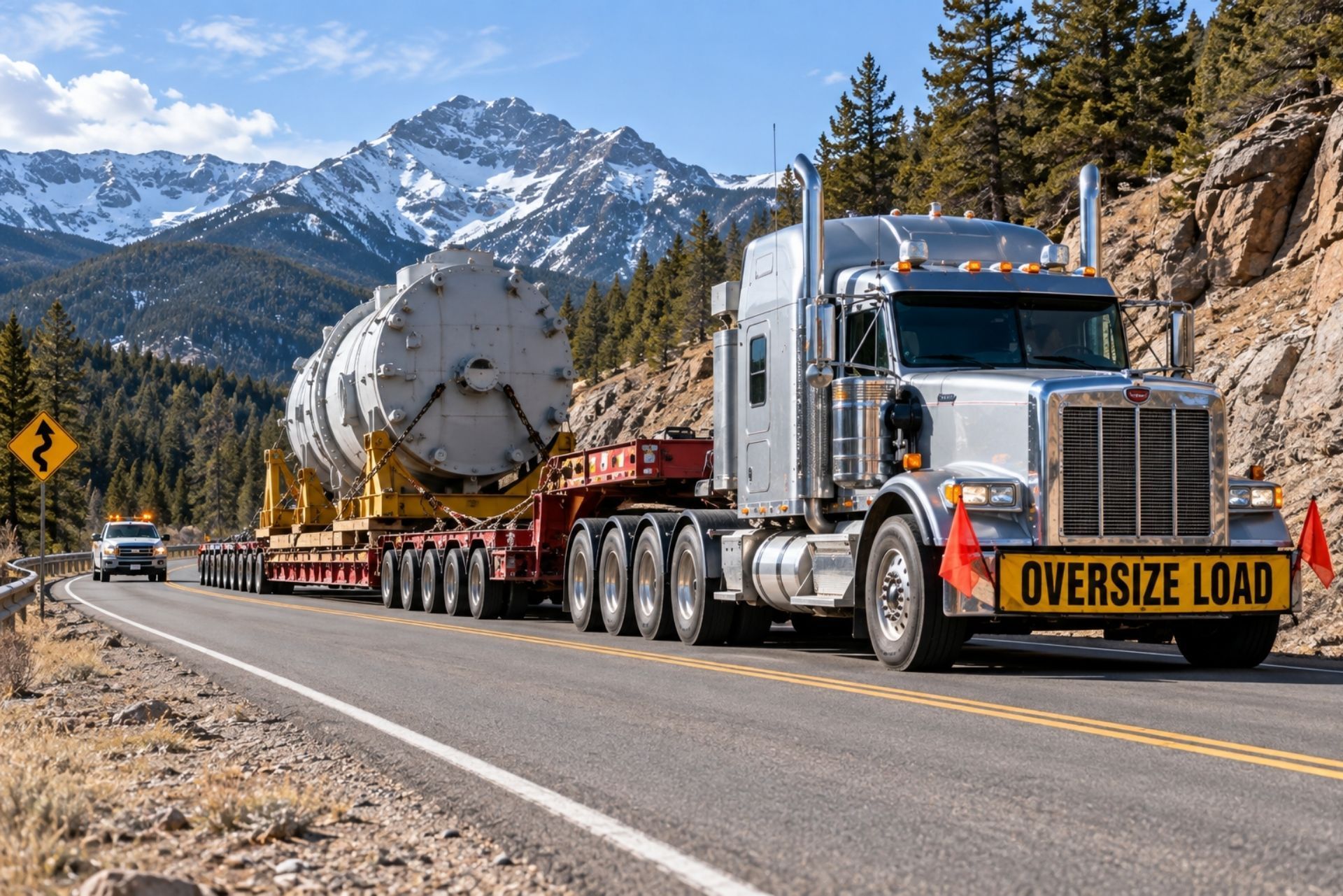
Hauling a 200,000-pound transformer through the Eisenhower Tunnel or moving a wind turbine blade down I-25 isn't standard freight work. Colorado's mountain terrain, strict permitting process, and high-value cargo create a unique risk profile that standard trucking policies simply don't cover. If you're running heavy haul or oversize operations in Colorado, your insurance needs to match the complexity of the loads you carry, the routes you travel, and the equipment you use to get it all done safely.
We've seen carriers get caught off guard by coverage gaps after a rigging failure on a mountain pass or a permit violation that voided their policy protections. The financial consequences can be severe: a single dropped load of industrial equipment can generate six-figure claims before legal costs even enter the picture. This guide breaks down the permits, excess liability considerations, rigging exposures, cargo limits, and costs specific to Colorado's heavy haul insurance market so you can protect your operation where it matters most.
Colorado's regulatory framework for oversize and overweight loads is managed primarily through the Colorado Department of Transportation (CDOT), with additional oversight from the Public Utilities Commission (PUC). Getting permits right isn't just a compliance checkbox: it directly affects your insurance coverage. A claim filed while operating outside your permit parameters can result in a denial, leaving your company exposed to the full cost of damages, injuries, and cargo losses.
CDOT Oversize/Overweight Permit Requirements
CDOT issues single-trip, annual, and multi-trip permits depending on load dimensions and weight. Loads exceeding 8'6" wide, 14'6" tall, or 80,000 pounds gross vehicle weight require permits before moving on Colorado roads. Superloads, those over 16' wide, 16' tall, 150' long, or 200,000 pounds, require engineering reviews and route surveys that can take 10 to 15 business days to process.
Your permit application must include exact dimensions, planned route, and proof of insurance. CDOT may restrict travel to specific hours, prohibit certain routes (particularly mountain passes during winter), and require escort vehicles. Failing to follow these conditions doesn't just risk fines of $500 to $5,000 per violation: it can compromise your insurance coverage if a loss occurs while you're out of compliance.
Insurance Minimums for State and Local Compliance
Colorado requires minimum liability coverage of $750,000 for most commercial carriers, but heavy haul operations frequently need $1 million or more to satisfy CDOT permit conditions and shipper contracts. The PUC actively monitors carrier compliance, and motor carriers lacking proper insurance face certificate revocation proceedings that can shut down operations entirely.
Many shippers and general contractors require $5 million or more in combined liability limits before they'll release high-value cargo to your care. This means your base policy plus any excess or umbrella layers need to stack up to meet
contractual requirements, not just state minimums.
By: Andy Roy
Owner & Agent
Essential Coverage for High-Value Logistics
Standard cargo and liability policies are built for conventional freight. Heavy haul and oversize load insurance in Colorado demands specialized endorsements and higher limits that reflect the true value and risk of what you're moving.
Setting Realistic Cargo Limits for Specialized Loads
A typical motor cargo policy caps at $100,000 to $250,000 per load. That's fine for palletized consumer goods but dangerously low for a $2 million electrical transformer or a $750,000 piece of mining equipment. Your cargo limits should match the highest-value load you're likely to carry, with a reasonable buffer.
We recommend reviewing your cargo manifest history and upcoming contracts to set a realistic ceiling. Some underwriters offer scheduled cargo coverage for specific high-value shipments, which can be more cost-effective than maintaining a blanket high-limit policy year-round. One common mistake: assuming the shipper's insurance covers the load in transit. Most shipper policies exclude coverage once cargo is in the carrier's custody.
Excess Liability and Umbrella Protection
Excess liability fills the gap between your primary auto liability and general liability limits and the amounts your contracts or risk exposure actually demand. For heavy haul operators in Colorado, a $5 million umbrella policy is common, and operations hauling through populated corridors or near infrastructure often carry $10 million.
Colorado has raised its cap on noneconomic damages for civil actions filed or resolved in 2026, which means jury awards in accident cases involving oversize loads can climb higher than in previous years. A multi-vehicle accident caused by a wide load on a two-lane mountain highway can generate bodily injury claims well beyond $1 million. Your umbrella policy is what stands between a survivable loss and a business-ending judgment.
Rigging and Hook Liability Exposures
Rigging liability is one of the most overlooked exposures in heavy haul operations. Every time your crew uses chains, slings, cranes, or specialized tie-downs to secure or lift a load, you're accepting liability for damage that occurs during that process. A rigging failure that drops a 50-ton generator doesn't just destroy the cargo: it can damage the trailer, the loading dock, nearby property, and injure workers.
Standard motor cargo policies often exclude damage occurring during loading and unloading. You need a specific inland marine or rigger's liability endorsement that covers your equipment and operations during these critical phases. The cost of this endorsement typically runs $2,000 to $8,000 annually depending on your volume and claim history, but a single rigging claim can easily exceed $500,000.
Comparison: Standard Trucking vs. Heavy Haul Insurance
The differences between a standard commercial trucking policy and one built for heavy haul are significant. Here's how they stack up:
| Coverage Area | Standard Trucking | Heavy Haul / Oversize |
|---|---|---|
| Auto Liability | $750K - $1M | $1M - $5M+ |
| Cargo Limits | $100K - $250K | $500K - $5M+ |
| Rigging/Hook Liability | Typically excluded | Endorsed or standalone |
| Escort Vehicle Coverage | Not applicable | Required endorsement |
| Permit Compliance | Basic USDOT | CDOT oversize/superload |
| Trailer Types Covered | Standard dry van, flatbed | Lowboy, multi-axle, RGN, Schnabel |
| Typical Annual Premium | $8K - $15K per truck | $15K - $40K+ per truck |
The premium difference reflects real risk. Oversize loads interact with traffic differently, require specialized equipment, and operate on routes with tighter margins for error.
Factors Influencing Insurance Costs in the Rocky Mountain Region
Colorado's geography and weather patterns create cost pressures you won't find in flatland states. Underwriters price policies based on where you drive, not just what you haul.
Terrain and Weather Risks on I-70 and Mountain Passes
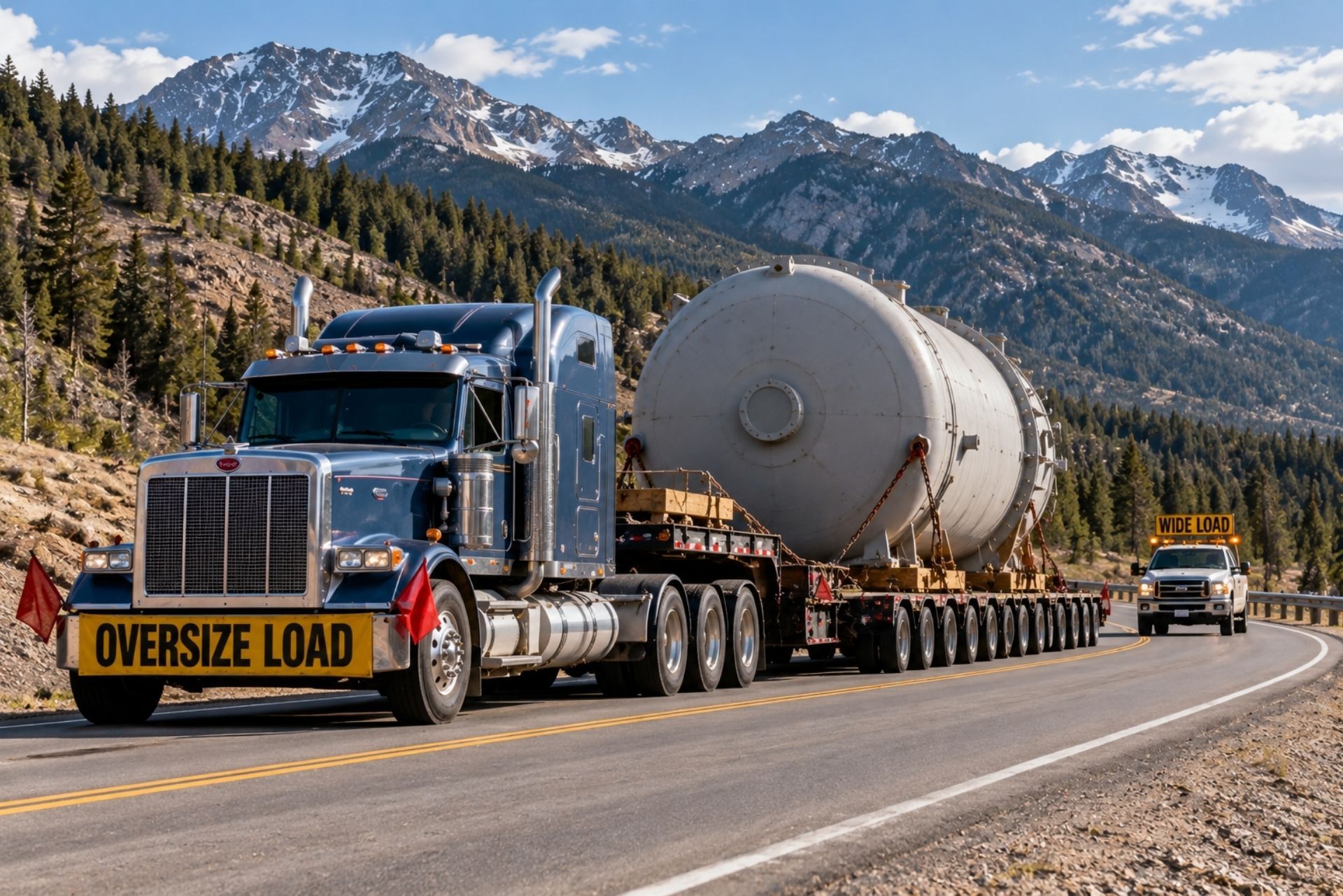
I-70 through the Eisenhower Tunnel and over Vail Pass is one of the most challenging freight corridors in North America. Grades exceeding 6%, sharp curves, and elevation changes from 5,000 to 11,000 feet stress equipment and increase accident probability. Winter closures on I-70, US-6, and US-40 can strand oversize loads for hours or days, creating additional exposure to weather damage and theft.
Underwriters factor these route risks into your premium. Carriers that primarily operate along the Front Range corridor (I-25 between Pueblo and Fort Collins) typically pay less than those running regular loads through the mountain passes. If your routes include Wolf Creek Pass or the Million Dollar Highway, expect your premiums to reflect those hazards.
Escort Vehicle and Pilot Car Requirements
Colorado requires pilot cars for loads exceeding 12' wide on most highways, and dual escorts (front and rear) for loads over 14' wide. Superloads may require law enforcement escorts as well. Each escort vehicle needs its own liability coverage, and any accident involving your escort car during a move can generate claims against your operation.
Some carriers use third-party pilot car services, but you should verify their insurance certificates before every job. If their coverage lapses and they cause an accident while escorting your load, you could face vicarious liability claims. Colorado's
damage caps in personal injury cases still allow substantial awards, and an uninsured escort vehicle adds unnecessary risk to every move.
Common Questions About Colorado Oversize Insurance
Do I need separate insurance for each oversize permit? No. Your commercial auto and cargo policies cover permitted moves as long as the policy endorsements match your operations. But your insurer needs to know you're hauling oversize loads: failing to disclose this can void coverage.
What happens if my load causes road damage? You're financially responsible for any damage to roads, bridges, or guardrails. CDOT will bill you directly, and these costs aren't always covered under standard liability. Ask your agent about a public entity property damage endorsement.
Can I use my personal auto policy for a pilot car? No. Personal auto policies exclude commercial escort activities. You need a commercial auto policy on any vehicle used as a pilot car, even if it's your personal truck.
How much does heavy haul insurance cost per truck in Colorado? Expect $15,000 to $40,000 or more per power unit annually, depending on cargo values, routes, driver experience, and claims history. Mountain pass operations and superload work push premiums toward the higher end.
Are crane and rigging operations covered under my cargo policy? Usually not. Cargo policies cover goods in transit but often exclude loading and unloading activities. You'll need a separate rigger's liability or inland marine endorsement.
Making the Right Choice for Your Fleet
Getting the right insurance for oversize and heavy haul work in Colorado isn't about finding the cheapest premium. It's about building a coverage structure that matches your actual risk exposure, from the cargo values you handle to the mountain passes you travel.
Start by auditing your current policies against the loads you're actually hauling. Check whether your cargo limits cover your highest-value shipments, confirm your rigging exposures are endorsed, and make sure your excess liability stacks high enough to satisfy both CDOT requirements and shipper contracts. Work with an independent agent who specializes in heavy haul, not a generalist who writes mostly personal auto.
Compare at least three quotes from carriers experienced in Colorado's oversize market. The right policy won't just protect you from claims: it'll keep your permits valid, your contracts intact, and your trucks moving through the Rockies with confidence.
About The Author: Andy Roy
As Owner and Agent at Pure Risk Advisors, I’ve spent over three decades helping clients find reliable, affordable coverage they can count on. Licensed in Arizona, Colorado, and Wyoming, I take pride in offering personalized service and practical solutions that fit each client’s unique needs—backed by years of experience and a genuine commitment to my community.
Your Personal Insurance Solutions in Colorado
Our team of experts is dedicated to understanding your unique needs and crafting tailored insurance solutions to safeguard your most valued assets, providing you with the confidence and peace of mind you deserve.
3R Personal Insurance Agency
Why Work With 3R Insurance
Choose 3R Insurance and unlock a world of personalized, expert-driven insurance solutions tailored to protect what matters most to you. Experience unparalleled choice, transparency, and ongoing support as our dedicated agents guide you through your insurance journey, ensuring you receive the best coverage at competitive prices.

Choice & Transparency
At 3R Insurance, our independent agents set themselves apart from traditional insurance company agents by working for you, not the insurer. As independent agents, they have the flexibility to offer a diverse range of policies tailored to your unique needs.

Your Advocate
Our independent agents are committed to providing the best coverage suited for your individual requirements. They work diligently to align your insurance needs with your budget, ensuring you receive top-quality coverage at an affordable price.

Lifetime Expert Advice
With a wealth of industry knowledge, our independent insurance agents are true experts, capable of clarifying complex policies and rate changes. Their extensive experience with multiple insurance providers makes them reliable sources of information, offering invaluable guidance and support throughout your insurance journey. Experience the 3R Insurance difference with our commitment to choice, transparency, and exceptional service.
How To File A Insurance Claim in Colorado
Report the Incident
Promptly contact 3R Insurance to report the incident that led to the need for filing a claim. Provide accurate and detailed information about the circumstances, including the date, location, and any individuals involved. This timely reporting helps ensure the claims process proceeds as smoothly and efficiently as possible.
Gather Documentation
Collect any relevant documentation to support your claim, such as photos, videos, police reports, and witness statements. Organizing this evidence will help strengthen your claim and expedite the evaluation process, allowing our dedicated claims team to assess the situation and determine the appropriate compensation.
Stay in Touch and Cooperate
Keep an open line of communication with your 3R Insurance agent during the claims process. Respond to any requests for additional information or clarification promptly, and be prepared to work closely with our team to ensure a fair and timely resolution. Our goal is to provide exceptional support and guidance throughout the entire claims experience.
Safeguarding What Matters to You with Personal Insurance

Craig C.
Personal Insurance Client
Beth is awesome and brings incredible customer service and a willingness to help with new drivers. I receive and appreciate the emails I find in my inbox about policy renewals. Beth and her team make is easy to connect with and understand my multi-coverage policy.
Rebecca V.
Personal Insurance Client
3R Insurance Agency is the best insurance agency hands down. Customer service is great. They have resolved more issues over the years than I can count. Simply amazing!
Michelle M.
Personal Insurance Client
I have been with 3R insurance for years and have always had great success. Beth Woodward has always been helpful in getting the best insurance and rates for me.