
Colorado Dump Truck and Aggregate Hauling Insurance

8:30am - 5:00pm Mon-Fri
We'll Reply in 15min*
Colorado's construction and infrastructure boom shows no signs of slowing, and dump trucks hauling gravel, sand, and crushed stone are on nearly every highway and job site across the Front Range. But one rollover on I-70 or a spilled load at a subdivision site can generate six-figure claims in a hurry. If you own or operate aggregate haulers in Colorado, your insurance program isn't just a box to check: it's the financial backbone of your business. Getting the right mix of liability, physical damage, cargo, and mobile equipment coverage can mean the difference between surviving a bad claim and shutting your doors. This guide breaks down the specific coverages you need, the job-site exposures that catch haulers off guard, and the real cost factors that drive your premiums up or down in the Colorado market. Whether you're running a single tri-axle out of Grand Junction or managing a fleet of Super 10s along the I-25 corridor, the stakes are too high to guess at your coverage. We've seen too many operators discover gaps only after a loss, and by then, it's too late.
Core Insurance Requirements for Colorado Aggregate Haulers
Colorado's regulatory environment for commercial trucks is shaped by both federal FMCSA mandates and state-specific rules under C.R.S. § 42-4-235 and related statutes. Every dump truck operating on public roads needs a minimum level of auto liability, and most haulers need far more than the bare minimum to protect their assets. The type of material you're hauling, where you're hauling it, and whether you're crossing state lines all affect what coverages you must carry versus what you should carry. Let's walk through the three pillars of any aggregate hauling insurance program.
Primary Auto Liability and Colorado State Minimums
Federal law currently requires a minimum of $750,000 in auto liability for trucks over 10,001 pounds operating in interstate commerce. A proposed federal bill would raise that minimum to $5 million, which would dramatically reshape the insurance market if passed. For intrastate-only operations in Colorado, the state requires $300,000 CSL (combined single limit) for trucks under 26,001 pounds and $750,000 for heavier vehicles.
Most experienced agents recommend carrying $1 million in primary auto liability regardless of your operation's size. A serious injury accident involving a loaded dump truck routinely generates claims well above $750,000, and Colorado juries have shown a willingness to award significant damages. Umbrella or excess liability policies can extend your limits to $2 million, $5 million, or higher at a fraction of the cost of increasing your primary policy.
Physical Damage: Protecting Your Fleet from Mountain Road Hazards
Physical damage coverage, which includes both collision and comprehensive, protects your trucks themselves. Colorado's mountain passes, steep grades, and unpredictable weather create real hazards that flatland haulers don't face. Rockslides on Highway 6, ice on Vail Pass, and hail along the Eastern Plains can all damage or total a truck.
A new tri-axle dump truck can cost $180,000 to $250,000, and even a well-maintained used unit runs $80,000 to $140,000. Physical damage premiums are typically calculated as a percentage of the truck's stated or actual cash value, usually between 3% and 5%. One thing to keep in mind: if you're financing or leasing your trucks, your lender will require physical damage coverage with them listed as loss payee. Owner-operators who own their trucks outright sometimes drop this coverage to save money, but a single total loss can wipe out years of profit.
Motor Truck Cargo vs. Inland Marine for Aggregate Materials
Cargo insurance covers the materials you're hauling if they're damaged, lost, or spilled during transit. For aggregate haulers, the exposure is different from general freight. A load of crushed gravel isn't worth much per ton, but a spill on a highway can trigger expensive cleanup costs and third-party property damage claims.
Motor truck cargo policies typically cover loads while in transit on public roads. Inland marine coverage can fill gaps for materials stored at staging areas or being moved within a job site. Most Colorado haulers need at least $100,000 in cargo coverage, though contract requirements from general contractors or municipalities often push that to $250,000 or more. Check your hauling contracts carefully: many require specific coverage forms and limits.
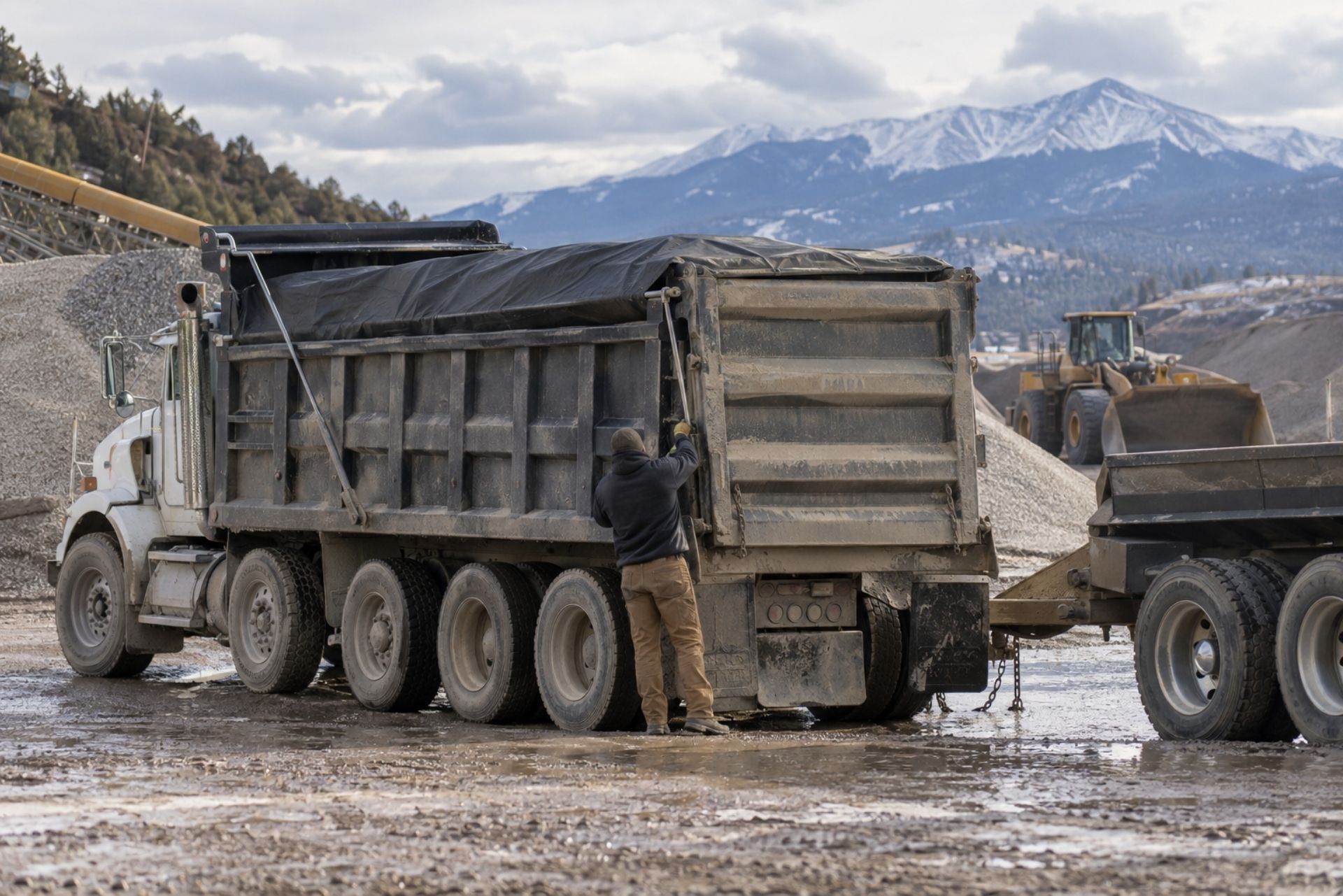

By: Andy Roy
Owner & Agent
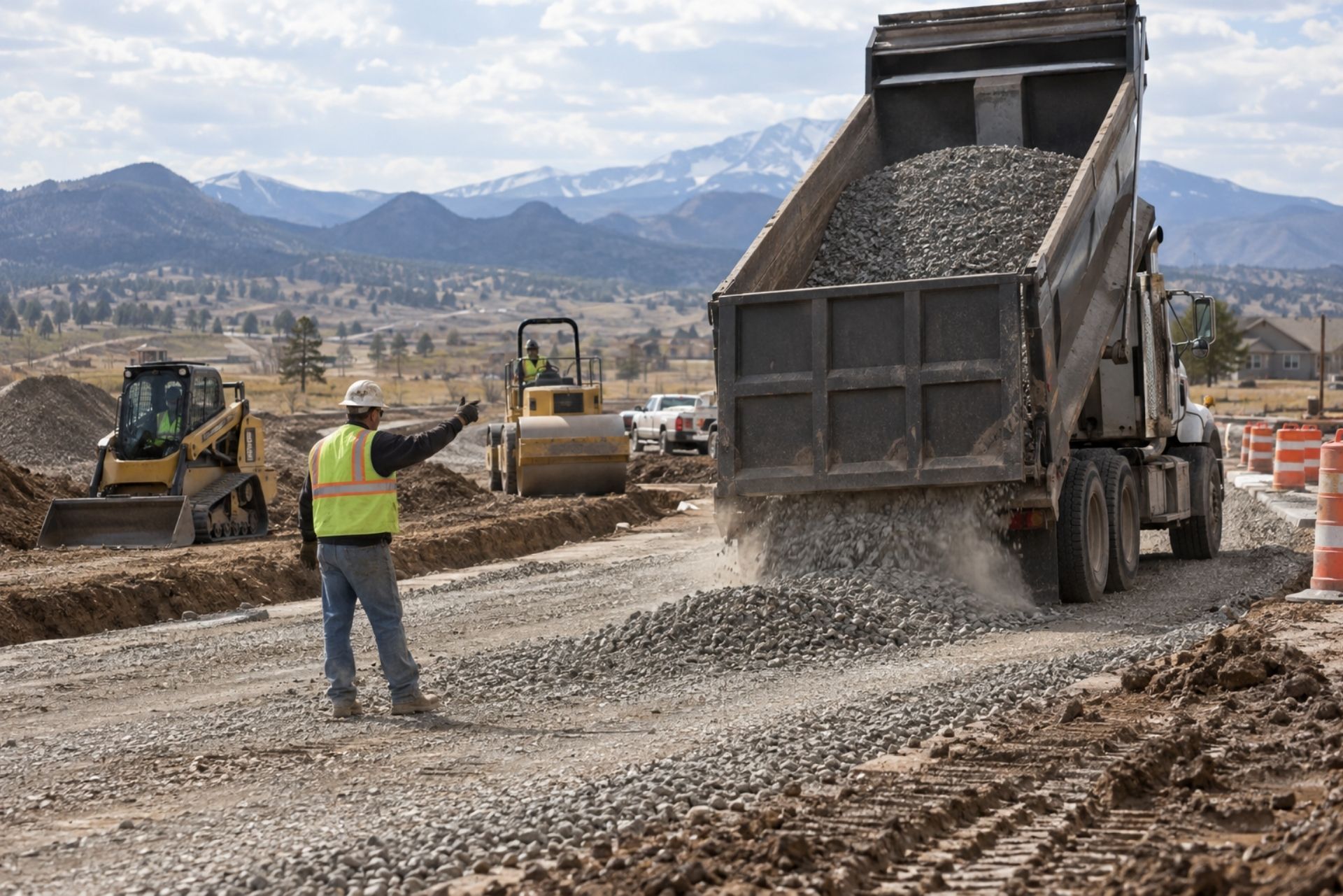
The road isn't the only place dump truck operators face risk. A huge portion of your liability exposure happens at the job site itself, where trucks are loading, unloading, backing up, and working alongside other contractors and pedestrians. These exposures require coverages that your commercial auto policy won't touch.
General Liability for Loading and Unloading Accidents
Your commercial auto policy covers your truck while it's being driven. But what about when your driver backs into a retaining wall at a residential site? Or when aggregate spills off the truck bed and damages a homeowner's landscaping during delivery? These scenarios fall into a gray area between auto liability and general liability, and disputes between the two policies are common.
Colorado excavation and hauling contractors need a commercial general liability (CGL) policy that specifically addresses loading and unloading operations. A typical CGL policy for a small aggregate hauling operation runs $3,000 to $8,000 annually, depending on your revenue, number of employees, and claims history. Make sure your policy includes completed operations coverage, which protects you after a job is done if problems surface later.
Insuring Loaders, Excavators, and Specialized Mobile Equipment
Many aggregate haulers own more than just dump trucks. Front-end loaders, skid steers, and small excavators used at pit sites or staging areas need their own coverage. Standard commercial auto policies exclude equipment that doesn't travel on public roads.
Contractors' equipment insurance (also called inland marine or mobile equipment coverage) protects these assets. Premiums for equipment policies vary based on the total scheduled value of your equipment, typically running 1% to 3% of the total insured value per year. A hauler with $400,000 in loaders and attachments might pay $4,000 to $12,000 annually. Rented equipment needs separate consideration: your policy may not cover rented items unless you add a rented equipment endorsement.
Pollution and Environmental Cleanup Considerations
Aggregate materials themselves aren't typically classified as pollutants, but the trucks hauling them carry diesel fuel, hydraulic fluid, and other substances that absolutely are. A ruptured fuel tank at a job site near a creek or wetland can trigger environmental cleanup obligations under Colorado's Water Quality Control Act (C.R.S. § 25-8-101 et seq.) and federal EPA regulations.
Standard CGL and auto policies contain pollution exclusions. If your trucks operate near waterways, residential wells, or environmentally sensitive areas, a pollution liability endorsement or standalone environmental policy is worth serious consideration. Cleanup costs for even a small diesel spill can reach $50,000 to $150,000, and regulatory fines compound the problem. Colorado's commercial insurance market in 2026 reflects growing underwriter concern about environmental exposures, so expect questions about your spill prevention practices during the application process.
Comparison of Coverage Tiers for Dump Truck Operations
Here's how a typical insurance program stacks up at three different levels for a single dump truck operation in Colorado:
| Coverage | Basic (State Minimum) | Standard | Comprehensive |
|---|---|---|---|
| Auto Liability | $750,000 CSL | $1,000,000 CSL | $1,000,000 + $2M Umbrella |
| Physical Damage | None (if owned outright) | ACV with $2,500 deductible | ACV with $1,000 deductible |
| Cargo | $100,000 | $250,000 | $500,000 |
| General Liability | $1M/$2M occurrence/aggregate | $1M/$2M with completed ops | $2M/$4M with completed ops |
| Mobile Equipment | Not included | Scheduled up to $200K | Scheduled up to $500K |
| Pollution | Excluded | Excluded | $500K endorsement |
| Estimated Annual Cost | $9,000 - $12,000 | $14,000 - $20,000 | $22,000 - $35,000 |
The basic tier meets legal requirements but leaves major gaps. The standard tier covers most common claim scenarios. The comprehensive tier is what we recommend for haulers working on municipal contracts or large commercial projects where contractual requirements and exposure levels are highest.
Factors Influencing Insurance Costs in Colorado
Colorado owner-operators with their own authority typically pay between $9,000 and $17,000 per year for commercial truck insurance, though dump truck and aggregate hauling operations often land at the higher end of that range due to increased physical damage exposure and job-site liability. Several factors push your premiums up or pull them down.
The Impact of Radius of Operation and Hauling Routes
Insurers care deeply about where your trucks go. A hauler running a 50-mile radius around Denver on paved highways presents a very different risk profile than one hauling over mountain passes to resort construction sites in Summit County.
Colorado's geography creates distinct risk zones. The cost of insuring trucks in Colorado reflects higher accident frequency along the I-25 urban corridor and higher severity on mountain routes where grades, weather, and limited shoulder space increase the chance of serious wrecks. If you can document a tight, low-risk radius of operation, you'll have a stronger negotiating position with underwriters.
Driver MVRs and Safety Management Systems (SMS) Scores
Your drivers' motor vehicle records are the single biggest controllable factor in your premium. A clean MVR with no accidents or moving violations in the past three years can save you 15% to 25% compared to a driver with even one at-fault accident. Colorado requires CDL holders to report out-of-state violations within 30 days under C.R.S. § 42-2-403.
Your FMCSA SMS scores matter too, especially your Crash Indicator and Unsafe Driving BASICs. Carriers with scores above the intervention threshold will find it difficult to get quotes from preferred markets, pushing them toward surplus lines carriers that charge significantly more. Investing in dash cameras, regular safety meetings, and a written safety program pays dividends at renewal time. Premiums
tend to rise in Colorado when carriers neglect these fundamentals.
Common Questions About Colorado Hauling Insurance
Do I need a separate policy for each dump truck I own? Not necessarily. Most insurers write fleet policies that cover multiple units under one policy, which is usually cheaper per truck than individual policies. You can add or remove trucks as your fleet changes.
Does my commercial auto policy cover my truck while it's on a job site? It covers the truck itself, but liability for job-site incidents often falls under your general liability policy. The handoff between the two policies depends on whether the truck was "in operation" at the time of the incident.
What happens if I haul into Wyoming or Nebraska occasionally? If you cross state lines, you're engaged in interstate commerce and must meet federal FMCSA insurance minimums. Your policy needs to reflect interstate operations, or you risk a coverage denial on a claim.
Can I reduce my premium by increasing my deductible? Yes. Moving from a $1,000 to a $5,000 deductible on physical damage can reduce that portion of your premium by 15% to 20%. Just make sure you can absorb that deductible out of pocket if you have a loss.
Are hired and non-owned auto endorsements necessary? If any of your employees ever drive a personal vehicle or a rented truck for business purposes, yes. Without this endorsement, you have no liability coverage for those situations
Making the Right Choice for Your Fleet
Dump truck and aggregate hauling insurance in Colorado isn't a one-size-fits-all purchase. Your coverage program should reflect your specific fleet size, hauling routes, contract requirements, and risk tolerance. The cheapest policy almost never provides adequate protection, and we've watched operators lose everything because they saved $2,000 a year on premiums and then faced a $500,000 claim with no coverage.
Work with an independent agent who understands Colorado's trucking market and can place your coverage with carriers that specialize in dump truck and construction hauling risks. Get at least three quotes, compare not just price but coverage forms and exclusions, and read your policy's exclusions section before you sign. The right insurance program won't just keep you legal: it'll keep you in business when the worst day of your career shows up without warning.
About The Author: Andy Roy
As Owner and Agent at Pure Risk Advisors, I’ve spent over three decades helping clients find reliable, affordable coverage they can count on. Licensed in Arizona, Colorado, and Wyoming, I take pride in offering personalized service and practical solutions that fit each client’s unique needs—backed by years of experience and a genuine commitment to my community.
Your Personal Insurance Solutions in Colorado
Our team of experts is dedicated to understanding your unique needs and crafting tailored insurance solutions to safeguard your most valued assets, providing you with the confidence and peace of mind you deserve.
3R Personal Insurance Agency
Why Work With 3R Insurance
Choose 3R Insurance and unlock a world of personalized, expert-driven insurance solutions tailored to protect what matters most to you. Experience unparalleled choice, transparency, and ongoing support as our dedicated agents guide you through your insurance journey, ensuring you receive the best coverage at competitive prices.

Choice & Transparency
At 3R Insurance, our independent agents set themselves apart from traditional insurance company agents by working for you, not the insurer. As independent agents, they have the flexibility to offer a diverse range of policies tailored to your unique needs.

Your Advocate
Our independent agents are committed to providing the best coverage suited for your individual requirements. They work diligently to align your insurance needs with your budget, ensuring you receive top-quality coverage at an affordable price.

Lifetime Expert Advice
With a wealth of industry knowledge, our independent insurance agents are true experts, capable of clarifying complex policies and rate changes. Their extensive experience with multiple insurance providers makes them reliable sources of information, offering invaluable guidance and support throughout your insurance journey. Experience the 3R Insurance difference with our commitment to choice, transparency, and exceptional service.
How To File A Insurance Claim in Colorado
Report the Incident
Promptly contact 3R Insurance to report the incident that led to the need for filing a claim. Provide accurate and detailed information about the circumstances, including the date, location, and any individuals involved. This timely reporting helps ensure the claims process proceeds as smoothly and efficiently as possible.
Gather Documentation
Collect any relevant documentation to support your claim, such as photos, videos, police reports, and witness statements. Organizing this evidence will help strengthen your claim and expedite the evaluation process, allowing our dedicated claims team to assess the situation and determine the appropriate compensation.
Stay in Touch and Cooperate
Keep an open line of communication with your 3R Insurance agent during the claims process. Respond to any requests for additional information or clarification promptly, and be prepared to work closely with our team to ensure a fair and timely resolution. Our goal is to provide exceptional support and guidance throughout the entire claims experience.
Safeguarding What Matters to You with Personal Insurance

Craig C.
Personal Insurance Client
Beth is awesome and brings incredible customer service and a willingness to help with new drivers. I receive and appreciate the emails I find in my inbox about policy renewals. Beth and her team make is easy to connect with and understand my multi-coverage policy.
Rebecca V.
Personal Insurance Client
3R Insurance Agency is the best insurance agency hands down. Customer service is great. They have resolved more issues over the years than I can count. Simply amazing!
Michelle M.
Personal Insurance Client
I have been with 3R insurance for years and have always had great success. Beth Woodward has always been helpful in getting the best insurance and rates for me.