
Colorado Appliance Repair and Installation Insurance

8:30am - 5:00pm Mon-Fri
We'll Reply in 15min*
A single misconnected gas line or a flooded kitchen from a faulty dishwasher install can turn a routine service call into a six-figure liability claim. For appliance repair and installation professionals working across Colorado, the right insurance isn't optional: it's the difference between surviving a bad day and closing your doors. Colorado's expanding right-to-repair laws have
opened new opportunities for independent technicians, but with those opportunities come real risks. Whether you're a solo operator running calls out of a Ford Transit or managing a crew of five, understanding your insurance needs in this state is worth every minute you spend on it. This guide breaks down the specific coverages, state requirements, cost factors, and common policy gaps that Colorado appliance professionals face in 2026.
Core Insurance Needs for Colorado Appliance Professionals
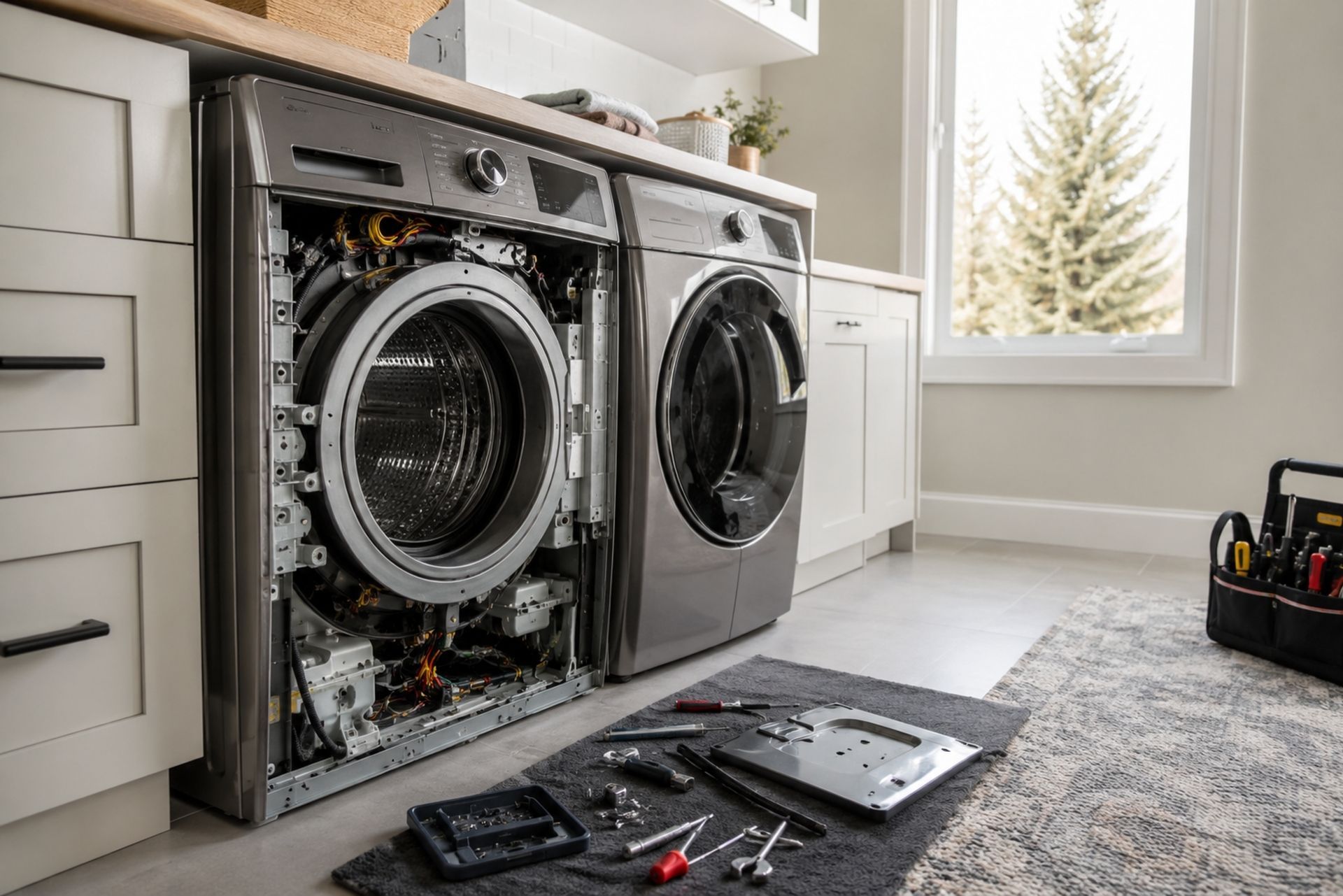
Every appliance technician walks into someone's home carrying risk. You're working with electrical systems, water lines, gas connections, and expensive equipment, all inside a customer's most valuable asset. A general liability policy forms your foundation, but it's rarely enough on its own. The combination of coverages you carry should reflect the actual work you do, not some generic small business template.
Colorado's market adds its own wrinkles. The state's expanded right-to-repair legislation means more independent techs are servicing brands that previously required authorized dealers. That's great for business, but it also means you're working on unfamiliar units more often, and unfamiliar units create unfamiliar risks.
General Liability for On-Site Damage
General liability (GL) covers third-party bodily injury and property damage. If you accidentally crack a granite countertop while pulling out a built-in oven, or a customer trips over your tool bag and breaks a wrist, your GL policy responds. Colorado businesses pay an average of $146 per month for a standard $1M/$2M general liability policy, which runs about 19% higher than the national average. That premium reflects Colorado's higher cost of living and active litigation environment.
Most appliance contractors should carry at least $1 million per occurrence and $2 million aggregate. Some commercial clients and property managers will require $2M/$4M limits before they'll let you on-site. Don't wait until you lose a contract to upgrade your limits.
Professional Liability for Installation Errors
Professional liability, sometimes called errors and omissions (E&O), covers claims arising from your professional judgment or workmanship. Imagine you install a refrigerator's water line, and three weeks later the connection fails while the homeowner is on vacation. The resulting water damage could exceed $50,000. Your GL policy might cover the property damage, but if the claim centers on your faulty installation technique, a professional liability policy fills the gap.
This coverage is especially critical for techs who handle gas appliance installations. A botched gas dryer hookup that causes a carbon monoxide incident is a nightmare scenario that E&O coverage directly addresses.
Tools and Equipment Floaters
Your tools are your livelihood. A standard business policy won't cover specialized diagnostic equipment, refrigerant recovery machines, or multimeters sitting in your van. An inland marine or tools floater policy covers these items against theft, damage, and loss, whether they're in your vehicle, at a job site, or in your shop.
Most appliance techs carry between $5,000 and $25,000 in tools and equipment. A floater policy for that range typically costs $15 to $40 per month, a small price compared to replacing everything out of pocket after a break-in.

By: Andy Roy
Owner & Agent
Colorado State Requirements and Regulations
Colorado doesn't require general liability insurance for all businesses, but several related coverages are mandatory depending on your setup. Ignoring these requirements can result in fines, license suspension, or personal liability exposure that no policy can fix after the fact.
Workers' Compensation Compliance
If you have employees in Colorado, workers' comp isn't optional. Under C.R.S. § 8-40-301, every employer must carry workers' compensation insurance, with very few exceptions. Even a single part-time helper triggers this requirement. The penalties for non-compliance are steep: fines of up to $500 per day, plus you become personally liable for any workplace injury.
For appliance repair crews, workers' comp claims often involve back injuries from moving heavy units, electrical burns, or cuts from sheet metal. Your experience modification rate (EMR) directly affects your premium. A clean safety record keeps that number below 1.0 and saves you real money each year.
Commercial Auto Insurance for Service Vans
Your personal auto policy almost certainly excludes business use. This is one of the most common coverage gaps we see with appliance contractors. If you're driving to a job site and cause an accident, your personal insurer can deny the claim entirely because the vehicle was being used for commercial purposes.
Colorado requires minimum auto liability limits of 25/50/15 ($25K per person, $50K per accident for bodily injury, $15K for property damage), but those minimums are dangerously low for a loaded service van. Most independent
contractors in the Denver metro and along the Front Range carry $100K/$300K/$100K or a $500K combined single limit. If your van carries $15,000 in tools and parts, you'll also want comprehensive and collision coverage on the vehicle itself.
Comparing Coverage: Basic vs. Comprehensive
Choosing between a bare-bones policy and a full commercial package comes down to risk tolerance and business size. Here's how the two approaches stack up.
Comparison Table: Essential vs. Extended Protection
| Coverage Type | Basic Package | Comprehensive Package |
|---|---|---|
| General Liability | $1M/$2M limits | $2M/$4M limits |
| Professional Liability | Not included | $1M per claim |
| Tools & Equipment | Up to $5,000 | Up to $25,000+ |
| Commercial Auto | State minimums (25/50/15) | $500K combined single limit |
| Workers' Comp | If required by law | Included with lower EMR targets |
| Hired/Non-Owned Auto | Not included | Included |
| Business Interruption | Not included | Covers lost income during claims |
| Estimated Monthly Cost | $120 - $180 | $275 - $450 |
A basic package works for solo operators handling simple electric appliance repairs. Once you're installing gas ranges, managing employees, or servicing commercial kitchens, the comprehensive route pays for itself the first time you face a serious claim.
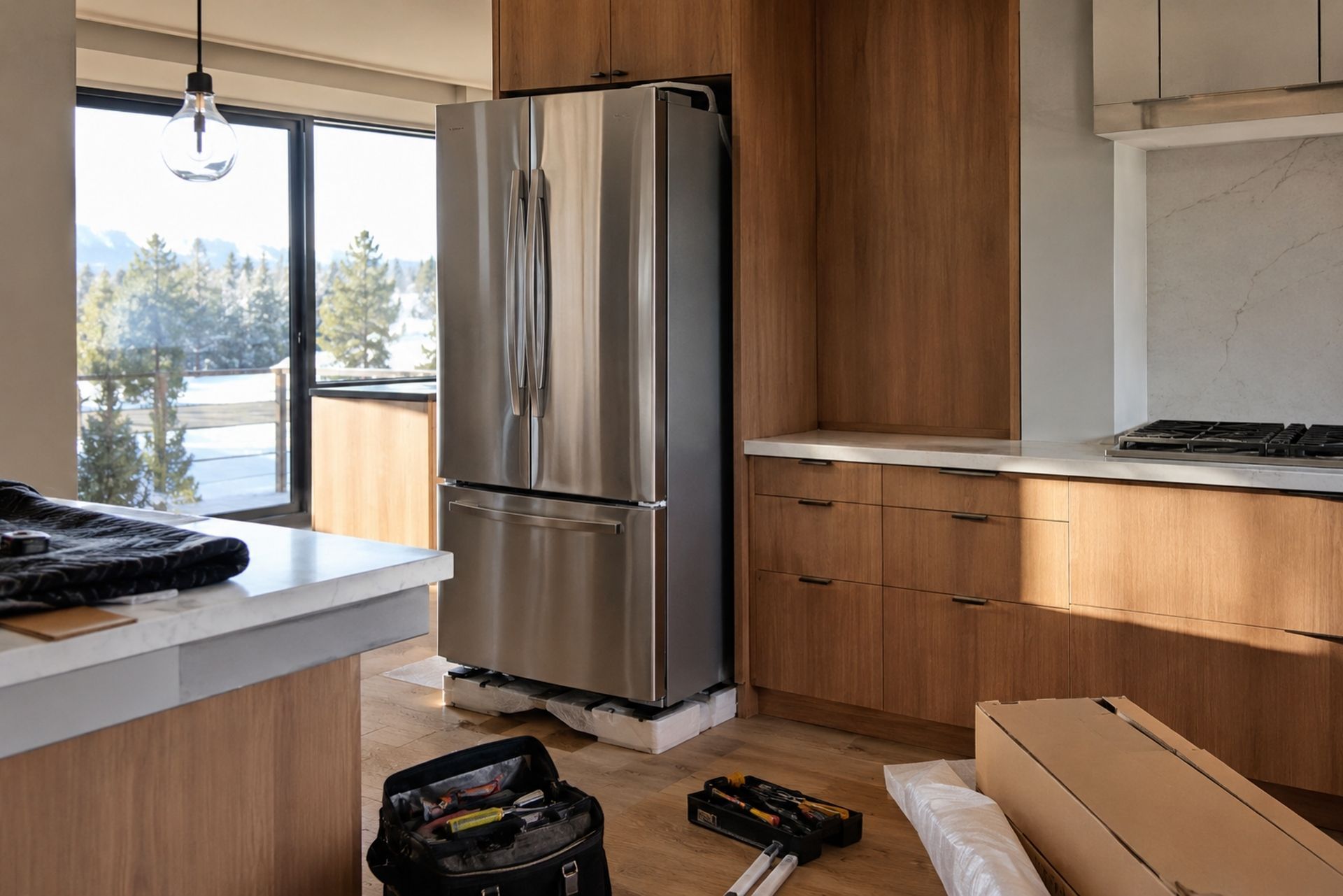
Insurance carriers price your policy based on risk. Understanding what drives your premium helps you control costs without sacrificing coverage.
Service Area and High-Risk Locations
Where you work matters. Techs operating in Denver, Boulder, and Colorado Springs face higher premiums than those in rural areas like the Western Slope or San Luis Valley. Urban areas mean more traffic accidents, higher property values, and more expensive claims. If your service territory includes wildfire-prone zones along the Front Range, some carriers may add surcharges. The Marshall Fire in 2024 reshaped how insurers evaluate risk for contractors working in those communities, and that caution hasn't faded.
Types of Appliances Serviced (Gas vs. Electric)
Gas appliance work carries a higher risk profile than electric-only service. Carriers know that gas leaks, explosions, and carbon monoxide incidents generate larger claims. If you service gas ranges, dryers, water heaters, or furnaces, expect your premium to be 15% to 30% higher than a tech who only handles electric units.
Some contractors reduce their premiums by clearly documenting their training certifications, maintaining safety logs, and limiting gas work to specific, credentialed team members. These steps show underwriters that you're managing risk proactively.
Common Questions About Appliance Service Insurance
FAQ: Do I need insurance if I only work part-time?
Yes. Insurance carriers don't distinguish between full-time and part-time operations. A single service call can produce a claim worth tens of thousands of dollars regardless of how many hours you work per week. Many part-time techs carry a smaller GL policy with $500K/$1M limits to keep costs manageable.
FAQ: Does my policy cover water damage from a leaky install?
It depends on your policy structure. General liability typically covers the resulting property damage to the customer's home. Professional liability covers claims that your workmanship caused the leak. Without both, you could face a gap. Always confirm with your agent that completed operations coverage is included in your GL policy.
FAQ: How do I get a certificate of insurance for a client?
Contact your insurance agent or carrier and request a Certificate of Insurance (COI). Most agents can issue one within 24 hours, often the same day. The COI lists your coverage types, limits, and policy dates. Property managers and commercial clients routinely require these before allowing you on-site.
FAQ: Is my personal truck covered while I'm working?
Almost certainly not. Personal auto policies contain business-use exclusions. If you're driving to or from a job and get into an accident, your personal insurer can deny the claim. You need a commercial auto policy or, at minimum, a business-use endorsement on your personal policy. Colorado's right-to-repair expansion has brought more independent techs onto the road, and this coverage gap catches many of them off guard.
FAQ: Does insurance pay for tools stolen from my van?
Only if you carry an inland marine or tools floater policy. Your commercial auto policy covers the vehicle, not its contents. Your homeowner's policy won't cover business equipment either. A tools floater is the only reliable way to protect your gear against theft, whether it happens in a parking lot or at a job site.
Making the Right Choice for Your Business
The right insurance setup for a Colorado appliance repair and installation business isn't one-size-fits-all. A solo tech doing weekend washer repairs has different needs than a five-person crew installing commercial kitchen equipment across the Front Range. But every professional in this trade shares the same core exposure: you're working inside other people's properties with tools, water, electricity, and sometimes gas.
Start by getting at least three quotes from agents who understand contractor insurance in Colorado. An independent agent who works with multiple carriers can often find better rates than going direct. Ask specifically about completed operations coverage, tools floaters, and business auto, the three areas where appliance techs most often discover gaps after a claim.
Your insurance isn't just a cost of doing business. It's what keeps your business standing when something goes wrong on a Tuesday afternoon that you never saw coming.
About The Author: Andy Roy
As Owner and Agent at Pure Risk Advisors, I’ve spent over three decades helping clients find reliable, affordable coverage they can count on. Licensed in Arizona, Colorado, and Wyoming, I take pride in offering personalized service and practical solutions that fit each client’s unique needs—backed by years of experience and a genuine commitment to my community.
Your Personal Insurance Solutions in Colorado
Our team of experts is dedicated to understanding your unique needs and crafting tailored insurance solutions to safeguard your most valued assets, providing you with the confidence and peace of mind you deserve.
3R Personal Insurance Agency
Why Work With 3R Insurance
Choose 3R Insurance and unlock a world of personalized, expert-driven insurance solutions tailored to protect what matters most to you. Experience unparalleled choice, transparency, and ongoing support as our dedicated agents guide you through your insurance journey, ensuring you receive the best coverage at competitive prices.

Choice & Transparency
At 3R Insurance, our independent agents set themselves apart from traditional insurance company agents by working for you, not the insurer. As independent agents, they have the flexibility to offer a diverse range of policies tailored to your unique needs.

Your Advocate
Our independent agents are committed to providing the best coverage suited for your individual requirements. They work diligently to align your insurance needs with your budget, ensuring you receive top-quality coverage at an affordable price.

Lifetime Expert Advice
With a wealth of industry knowledge, our independent insurance agents are true experts, capable of clarifying complex policies and rate changes. Their extensive experience with multiple insurance providers makes them reliable sources of information, offering invaluable guidance and support throughout your insurance journey. Experience the 3R Insurance difference with our commitment to choice, transparency, and exceptional service.
How To File A Insurance Claim in Colorado
Report the Incident
Promptly contact 3R Insurance to report the incident that led to the need for filing a claim. Provide accurate and detailed information about the circumstances, including the date, location, and any individuals involved. This timely reporting helps ensure the claims process proceeds as smoothly and efficiently as possible.
Gather Documentation
Collect any relevant documentation to support your claim, such as photos, videos, police reports, and witness statements. Organizing this evidence will help strengthen your claim and expedite the evaluation process, allowing our dedicated claims team to assess the situation and determine the appropriate compensation.
Stay in Touch and Cooperate
Keep an open line of communication with your 3R Insurance agent during the claims process. Respond to any requests for additional information or clarification promptly, and be prepared to work closely with our team to ensure a fair and timely resolution. Our goal is to provide exceptional support and guidance throughout the entire claims experience.
Safeguarding What Matters to You with Personal Insurance

Craig C.
Personal Insurance Client
Beth is awesome and brings incredible customer service and a willingness to help with new drivers. I receive and appreciate the emails I find in my inbox about policy renewals. Beth and her team make is easy to connect with and understand my multi-coverage policy.
Rebecca V.
Personal Insurance Client
3R Insurance Agency is the best insurance agency hands down. Customer service is great. They have resolved more issues over the years than I can count. Simply amazing!
Michelle M.
Personal Insurance Client
I have been with 3R insurance for years and have always had great success. Beth Woodward has always been helpful in getting the best insurance and rates for me.