
Colorado Workers' Compensation Insurance for Nurses and Home Care Staff

8:30am - 5:00pm Mon-Fri
We'll Reply in 15min*
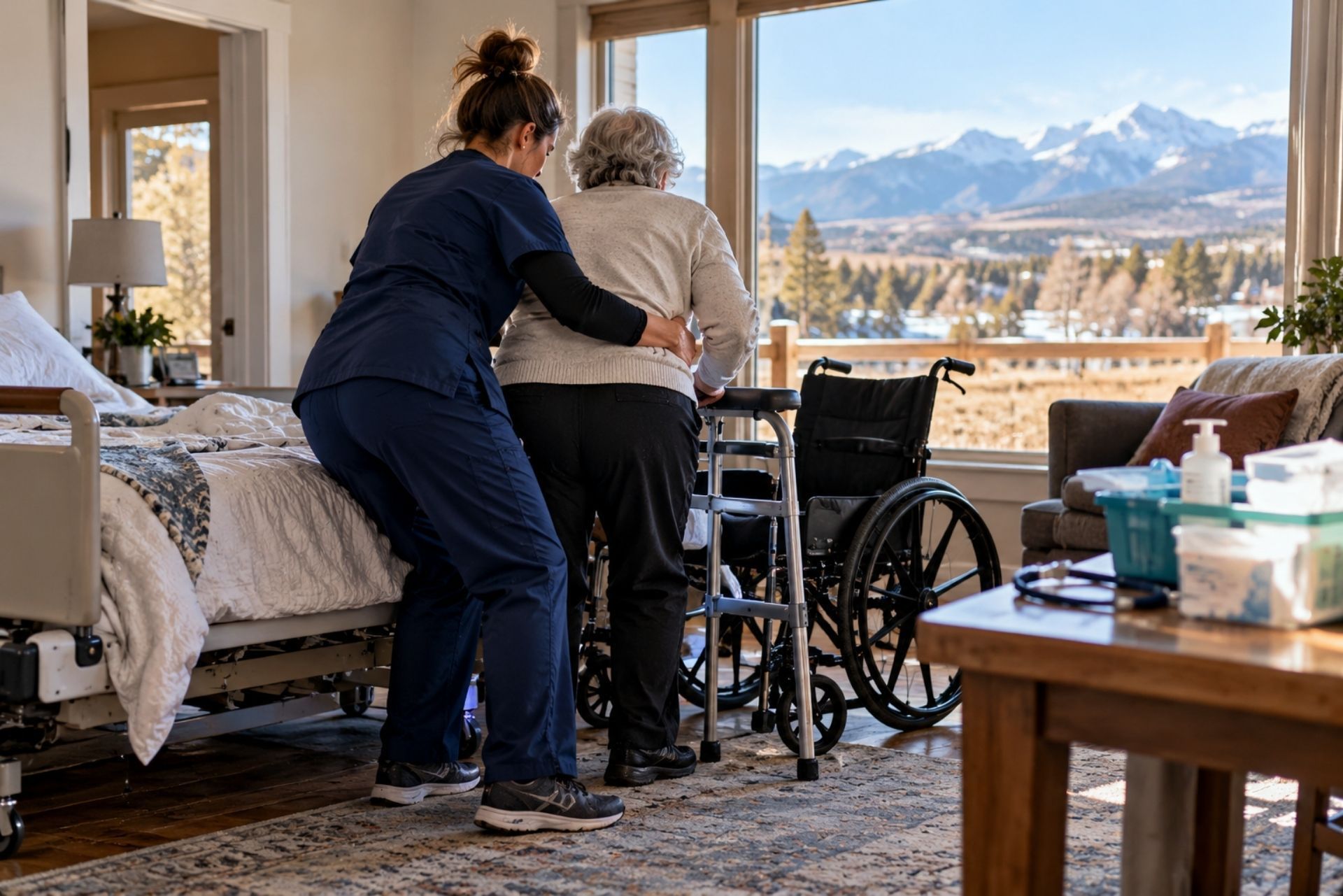
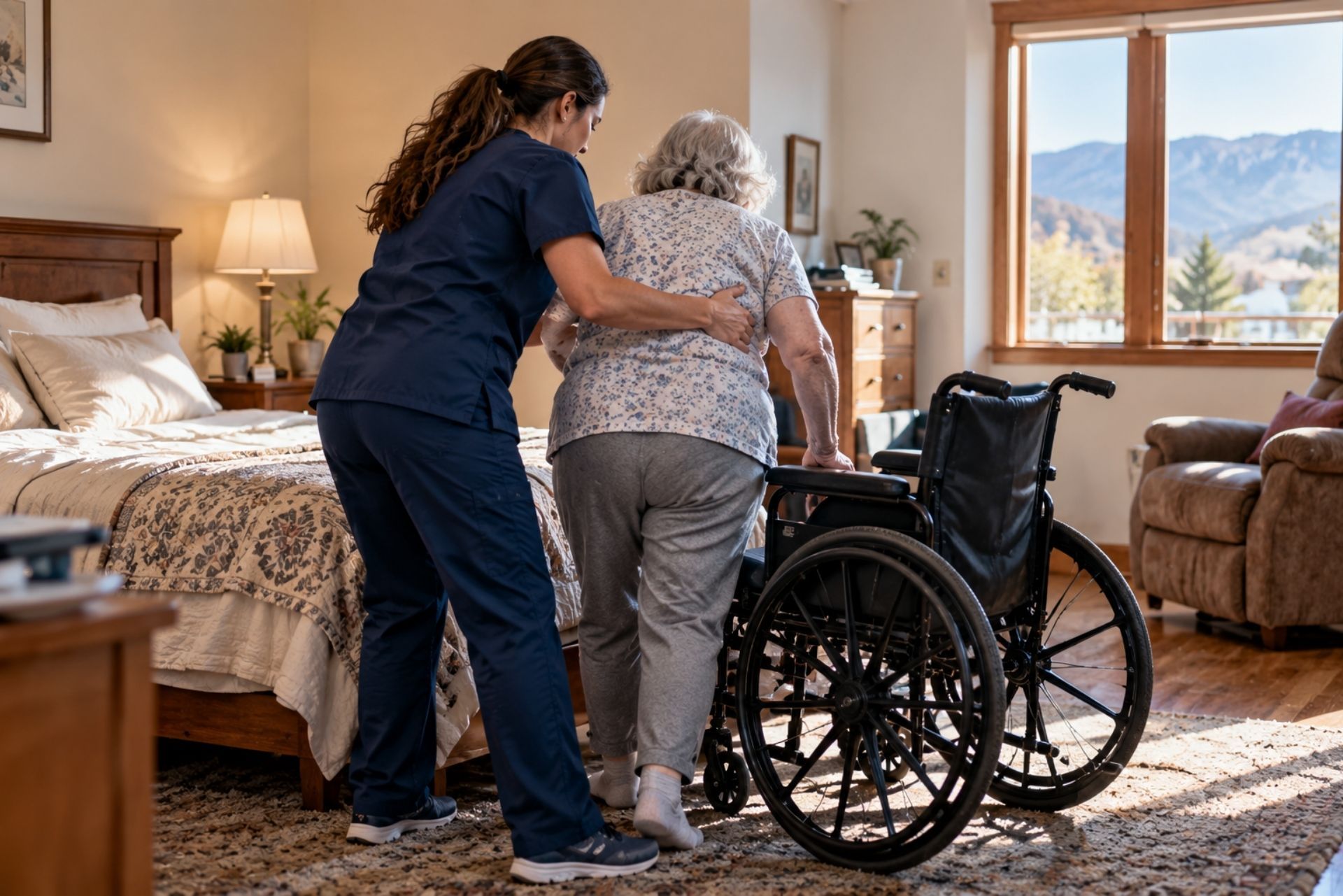
Picture this: a home care aide in Aurora is helping an 80-pound client transfer from bed to wheelchair when the client's knees buckle. The aide catches her, feels a pop in her lower back, and finishes the shift anyway. Three weeks later, that "minor strain" is an MRI, a surgical consult, and a claim that follows your agency through the next three renewals.
That's the reality of covering Colorado nurses and home care staff. One mislabeled class code or one undocumented needlestick can cost you more than a year of premium savings. This guide covers class codes, patient handling and sharps risks, audits, claims, and costs, with the details Colorado healthcare owners tend to learn too late.
The Essentials of Colorado Workers' Comp for Healthcare
Colorado requires nearly every employer with even one employee, including part-time staff, to carry workers' compensation under the Colorado Workers' Compensation Act (C.R.S. Title 8, Articles 40 to 47). There's no small-business exemption for healthcare agencies. If you have a single W-2 CNA working weekend shifts in Lakewood, you need a policy.
The coverage pays for medical treatment, lost wages (temporary total and temporary partial disability), permanent impairment benefits, and death benefits. It also includes Part Two employer's liability. That piece protects you when an injured worker's spouse sues separately or when a third party drags you into litigation over a workplace injury.
Healthcare employers face a specific mix of exposures that general office businesses never see:
- Musculoskeletal injuries from lifting, repositioning, and transferring patients
- Bloodborne pathogen exposure from needlesticks, lancets, and splashes
- Workplace violence from confused, agitated, or dementia-affected patients
- Driving injuries for home care staff traveling between client homes
- Slip and trip hazards inside private homes you don't control
One thing to keep in mind: home care workers spend their shifts in environments you can't inspect. A loose rug in a client's hallway in Pueblo, an icy driveway in Fort Collins, or an aggressive family dog all become your workers' comp exposure the moment your aide walks through the door.
The personal policy trap shows up here too. Your aide's personal auto policy may exclude or contest a crash that happens while driving between clients for pay. Her health insurance will likely deny a work-related back injury and point to workers' comp. Neither personal policy fills the gap your commercial coverage is supposed to close.

By: Andy Roy
Owner & Agent
Class codes drive your premium more than almost anything else. Colorado uses NCCI classifications, and each code carries its own loss cost, the base rate per $100 of payroll before your carrier applies its multiplier and your experience mod.
Misclassification is the most common mistake we see with healthcare agencies. It runs both directions. Put your clinical staff in a lower-rated clerical code and you'll get hit with a large additional premium at audit. Put your scheduler or billing coordinator in a clinical code and you're overpaying every single month.
Code 8824 vs. 8826: Home Health vs. Retirement Living
This is where a lot of agencies get confused, so let's clear it up. Codes 8824 and 8826 both belong to the retirement living center family. Code 8824 generally applies to healthcare employees at a retirement or assisted living community: the nurses, CNAs, and med techs providing hands-on care. Code 8826 typically picks up the non-clinical staff at those same communities, such as housekeeping, maintenance, activities, and administrative support that isn't strictly clerical.
Home health agencies sending aides and nurses into private homes are usually classified differently, most often under code 8835 for home, public, and traveling healthcare. If your home care agency was quoted under 8824 because someone assumed "senior care is senior care," ask your agent to verify it against the NCCI Scopes Manual. The difference in loss costs between these codes can be meaningful, and an auditor will reclassify you retroactively if the code doesn't match your operations.
The catch is that mixed operations exist. A company running both an assisted living community in Colorado Springs and a separate home care division may legitimately carry multiple codes. You'll need clean payroll records that show which employees worked in which operation.
Code 8833: Hospital and Clinical Nursing Staff
Code 8833 applies to professional employees at hospitals, including RNs, LPNs, therapists, and other clinical staff. Clinics and physician practices often use different codes, so don't assume a hospital code fits an outpatient urgent care in Boulder.
Staffing agencies placing nurses in hospitals face a separate question: who's the employer of record? If your agency pays the nurse, you generally carry the comp exposure, and the classification should reflect the work actually performed at the client facility. Get that spelled out in your client contracts before the first placement.
Common Nursing Injuries and Prevention Strategies
Healthcare workers get hurt at rates that surprise people outside the industry. Overexertion from patient handling tops the list, followed by slips, workplace violence, and sharps injuries. Each one has a different claim profile and a different prevention fix.
Safe Patient Handling and Ergonomic Equipment
Back and shoulder injuries from patient handling are the claims that hurt agencies most. They're expensive, they tend to drag on, and they often end with permanent impairment ratings. A single lumbar fusion claim can easily outweigh a small agency's annual premium.
The fix isn't "lift with your legs" training. Body mechanics alone don't protect a 130-pound aide moving a 250-pound patient. What actually works:
- Assess every patient's mobility at intake and document the required transfer method in the care plan.
- Supply mechanical lifts, slide sheets, and gait belts where the assessment calls for them, including in client homes.
- Require two-person transfers for patients above a set weight or mobility threshold, and staff accordingly.
- Train on the actual equipment your staff will use, then recheck competency at least annually.
- Track near-misses so you can spot problem patients or shifts before someone gets hurt.
For home care, put equipment requirements in the client service agreement. If a family refuses a Hoyer lift for a patient who needs one, you need a documented policy for declining or modifying service. Otherwise you're sending staff into a predictable injury.
Needlestick Protocols and Bloodborne Pathogen Exposure
A needlestick claim often starts small: the ER visit, baseline lab work, and post-exposure prophylaxis. It can grow fast if the source patient's status is unknown, and the anxiety alone can push an employee into counseling and lost time. Surgeons and other professional groups have long called for safer sharps devices and stronger injury prevention practices across clinical settings.
Federal rules set the baseline. OSHA requires a written Exposure Control Plan updated annually, plus a Sharps Injury Log that protects employee privacy. Employers also need to solicit and document input from frontline staff like nurses when choosing safety-engineered sharps devices. A plan written by an administrator who never draws blood won't satisfy that requirement.
Build a post-exposure protocol your staff can follow at 2 a.m. without calling anyone: wash the site, report immediately, get to the designated provider, and document the source patient. Home care nurses need sharps containers in every visit kit, not just at the office.
Here's some good news. The Colorado Division of Insurance approved an average 6.9% decrease in workers' compensation loss costs effective January 1, 2026. That marks the 12th straight year of declines statewide.
That said, a statewide average decrease doesn't guarantee your premium drops. Your carrier's loss cost multiplier, your experience mod, and your own claim history all sit on top of that base rate. An agency with two open back claims can see its premium climb even in a soft market.
Medical spending is the pressure point to watch. In Colorado, physician services now account for over 40% of workers' comp medical spend. That matters because nursing injuries tend to involve repeated physician visits, physical therapy referrals, and specialist consults. Smaller costs add up too. Mileage reimbursement for injured workers traveling to authorized medical appointments rose to $0.63 per mile in 2026, which stacks up quickly for rural staff driving from Alamosa or Craig to see an authorized provider.
Your premium formula looks roughly like this: payroll divided by 100, multiplied by your class code rate, multiplied by your experience mod, then adjusted by schedule credits or debits and any applicable discounts. The experience mod is the lever you control most. A mod below 1.0 means your losses are better than expected for your size, while one above 1.0 means you're paying a surcharge for past claims, typically for three years.
Comparison: Premium Factors for Different Care Settings
Different care settings carry different risk profiles. Here's how underwriters tend to view them:
| Factor | Home Health Agency | Assisted Living Community | Hospital / Clinical Staffing |
|---|---|---|---|
| Typical code family | 8835 | 8824 / 8826 | 8833 |
| Biggest injury driver | Solo patient transfers | Resident falls and lifts | Lifts, sharps, violence |
| Environment control | Low (client homes) | High (your facility) | Shared with facility |
| Driving exposure | High | Low | Moderate (travel nurses) |
| Equipment access | Varies by client | Usually on-site | Usually on-site |
| Underwriter focus | Lift policies, auto safety | Staffing ratios, training | Contracts, employer of record |
Long-term care operators should also know that HB 23-1228 requires facilities to document and submit staffing and incident data to the Colorado Department of Public Health and Environment. Clean records there make it easier to show an underwriter your safety culture is real, not just a binder on a shelf.
Surviving the Annual Workers' Comp Audit
Your workers' comp premium starts as an estimate. At the end of the policy term, the carrier audits your actual payroll and classifications, then bills or refunds the difference. Agencies that grew fast during the year, or that misclassified staff, often get a five-figure invoice they didn't budget for.
Prepare before the auditor calls. You'll typically need:
- Payroll registers for the full policy period, broken out by employee
- Quarterly 941s and Colorado unemployment filings
- Job descriptions showing what each person actually does
- Overtime records (the premium portion of overtime is often excludable, but only if documented)
- Certificates of insurance for any subcontractors
- 1099 records for anyone you paid as a contractor
Split payroll for employees who work in more than one classification only when your records support it. A nurse supervisor who spends mornings on scheduling and afternoons on home visits generally stays in the clinical code unless your time records clearly separate the two.
The state audits insurers, too. The Colorado Division of Workers' Compensation conducts Rule 4 compliance audits to confirm carriers are adjusting claims according to the Workers' Compensation Act. That's a useful reminder that your carrier has obligations to your injured workers, and you can push back when a claim stalls.
Distinguishing Between W-2 Staff and Contractors
Home care agencies love the idea of 1099 caregivers. Colorado doesn't share that enthusiasm. Under C.R.S. 8-40-202, a worker is presumed to be an employee unless you can show they're free from your control and customarily engaged in an independent trade or business.
If you set the schedule, assign the clients, train the aide, and require your care protocols, that aide is almost certainly your employee. At audit, the carrier will add uninsured contractor payroll to your premium, often at your highest-rated clinical code. Worse, if that "contractor" gets hurt with no coverage, you may face the claim directly plus state penalties.
Legitimate independent nurses running their own businesses should provide a certificate of their own comp coverage or a valid rejection of coverage. Keep that paperwork current.
Managing Claims and Return-to-Work Programs
Colorado requires employees to report injuries in writing within four days, and employers generally must report lost-time injuries to the carrier and the Division promptly. Late reporting is one of the fastest ways to turn a manageable claim into a litigated one. Train your supervisors to treat every reported strain, stick, or fall as a claim until proven otherwise.
Your designated provider list matters, too. Colorado lets employers designate authorized treating providers, and you must give injured workers that list. If you don't, the worker may get to choose their own doctor, and you lose much of your ability to coordinate care.
A strong return-to-work program is your best cost control tool. Every day an injured nurse stays home on temporary total disability adds wage benefits to the claim. Modified duty brings them back sooner and usually speeds recovery. For healthcare, realistic light-duty options include:
- Phone check-ins with clients and families
- Chart review and care plan documentation
- New-hire orientation and competency checklists
- Scheduling support or intake calls
- Medication reconciliation that doesn't require lifting
Write these roles down before you need them. Scrambling to invent light duty after a doctor's note arrives looks improvised, and workers notice.
Keep an eye on the legislative calendar. Proposed bill
HB 26-1054 would give the Colorado Attorney General authority to enforce workplace safety standards, including state-level civil actions against employers. If it passes, sloppy safety documentation could carry consequences well beyond your claim file.
Common Questions About Nursing Insurance
Do I need workers' comp if I only have one part-time caregiver? Yes. Colorado requires coverage for virtually any employer with one or more employees, including part-timers and family members on payroll.
Can my home care aides be 1099 contractors to save on comp costs? Usually not. If you control their schedules, clients, and methods, Colorado treats them as employees, and an auditor will charge premium on that payroll anyway.
Does workers' comp cover a nurse injured driving between client homes? Generally yes, because travel between clients is part of the job. Your commercial auto or hired and non-owned auto coverage may also come into play for liability to others.
What happens if a nurse gets a needlestick from a patient with unknown status? Comp typically covers the emergency visit, testing, post-exposure medication, and follow-up labs. Report it immediately and log it in your Sharps Injury Log.
Why did my premium go up when rates dropped statewide? Statewide loss costs are just the starting point. Payroll growth, a higher experience mod from recent claims, or a class code correction can all push your number up.
How many quotes should I get?
Compare at least three, ideally through an independent agent who works with carriers comfortable writing home health and long-term care.
The Bottom Line for Your Healthcare Business
Colorado's falling loss costs give healthcare employers a real opening in 2026, but only agencies with clean classifications and documented safety programs will capture those savings. Get your class codes verified against your actual operations. Treat patient handling equipment as a cost of doing business, not a luxury. Build a sharps program your nurses helped design, and keep your Exposure Control Plan current.
Before your next renewal, pull your payroll records, loss runs, and contractor files together. Then sit down with an independent agent who understands the difference between an assisted living floor and a home visit in Grand Junction. Ask hard questions about your mod, your codes, and what your carrier's claims team does when a nurse gets hurt.
Your staff spend every shift taking care of other people. The right workers' comp program makes sure someone takes care of them, and your business, when a transfer goes wrong.
About The Author: Andy Roy
As Owner and Agent at Pure Risk Advisors, I’ve spent over three decades helping clients find reliable, affordable coverage they can count on. Licensed in Arizona, Colorado, and Wyoming, I take pride in offering personalized service and practical solutions that fit each client’s unique needs—backed by years of experience and a genuine commitment to my community.
Your Personal Insurance Solutions in Colorado
Our team of experts is dedicated to understanding your unique needs and crafting tailored insurance solutions to safeguard your most valued assets, providing you with the confidence and peace of mind you deserve.
3R Personal Insurance Agency
Why Work With 3R Insurance
Choose 3R Insurance and unlock a world of personalized, expert-driven insurance solutions tailored to protect what matters most to you. Experience unparalleled choice, transparency, and ongoing support as our dedicated agents guide you through your insurance journey, ensuring you receive the best coverage at competitive prices.

Choice & Transparency
At 3R Insurance, our independent agents set themselves apart from traditional insurance company agents by working for you, not the insurer. As independent agents, they have the flexibility to offer a diverse range of policies tailored to your unique needs.

Your Advocate
Our independent agents are committed to providing the best coverage suited for your individual requirements. They work diligently to align your insurance needs with your budget, ensuring you receive top-quality coverage at an affordable price.

Lifetime Expert Advice
With a wealth of industry knowledge, our independent insurance agents are true experts, capable of clarifying complex policies and rate changes. Their extensive experience with multiple insurance providers makes them reliable sources of information, offering invaluable guidance and support throughout your insurance journey. Experience the 3R Insurance difference with our commitment to choice, transparency, and exceptional service.
How To File A Insurance Claim in Colorado
Report the Incident
Promptly contact 3R Insurance to report the incident that led to the need for filing a claim. Provide accurate and detailed information about the circumstances, including the date, location, and any individuals involved. This timely reporting helps ensure the claims process proceeds as smoothly and efficiently as possible.
Gather Documentation
Collect any relevant documentation to support your claim, such as photos, videos, police reports, and witness statements. Organizing this evidence will help strengthen your claim and expedite the evaluation process, allowing our dedicated claims team to assess the situation and determine the appropriate compensation.
Stay in Touch and Cooperate
Keep an open line of communication with your 3R Insurance agent during the claims process. Respond to any requests for additional information or clarification promptly, and be prepared to work closely with our team to ensure a fair and timely resolution. Our goal is to provide exceptional support and guidance throughout the entire claims experience.
Safeguarding What Matters to You with Personal Insurance

Craig C.
Personal Insurance Client
Beth is awesome and brings incredible customer service and a willingness to help with new drivers. I receive and appreciate the emails I find in my inbox about policy renewals. Beth and her team make is easy to connect with and understand my multi-coverage policy.
Rebecca V.
Personal Insurance Client
3R Insurance Agency is the best insurance agency hands down. Customer service is great. They have resolved more issues over the years than I can count. Simply amazing!
Michelle M.
Personal Insurance Client
I have been with 3R insurance for years and have always had great success. Beth Woodward has always been helpful in getting the best insurance and rates for me.