
Colorado Workers' Compensation Insurance for Home Health Aides

8:30am - 5:00pm Mon-Fri
We'll Reply in 15min*
A caregiver in Pueblo helps a 220-pound client from bed to wheelchair, feels something give in her lower back, and finishes her shift anyway. Two days later she's driving to her third visit of the day on I-25 when a pickup rear-ends her at a light. That's two potential claims in one week, and both land on your workers' compensation policy.
Home care agencies in Colorado face a risk profile unlike that of a hospital or nursing facility. Your aides work alone, in homes you don't control, and spend a real chunk of their paid time behind the wheel. This guide to Colorado workers' comp for home health aides covers how class codes, driving exposure, patient handling, audits, claims, and costs fit together, so you can price your coverage accurately and keep your people working.
Understanding Workers' Comp for Colorado Home Health Agencies
Colorado requires nearly every employer with even one employee to carry workers' compensation under the Workers' Compensation Act of Colorado (C.R.S. Title 8, Articles 40 through 47). Part-time caregivers count. So do per-diem aides who pick up only weekend shifts. Operating without coverage exposes you to fines from the Division of Workers' Compensation and leaves you personally liable for injury costs.
The policy has two parts. Part One pays statutory benefits: medical care, wage replacement (generally two-thirds of the worker's average weekly wage, subject to state maximums), and permanent impairment benefits. Part Two, employers' liability, covers you if an injured worker or a family member sues outside the comp system.
One thing to keep in mind is that the rules themselves keep shifting. The DOWC adopted
new versions of Rule 16 (Utilization Standards) and Rule 18 (Medical Fee Schedule) taking effect January 1, 2027. Those rules govern what treatment gets approved and what providers get paid, which eventually flows into claim costs and your premiums. Agency owners who follow
the Division's regular updates usually see changes coming before their renewal does.


By: Andy Roy
Owner & Agent
Correct Class Codes for Home Health Aides and Caregivers
Your premium starts with a simple formula: payroll divided by 100, multiplied by the rate for each class code. Get the code wrong and every number downstream is wrong too. Misclassification is the single most common reason we see home care agencies hit with surprise audit bills.
Colorado uses the NCCI classification system. For most non-medical and medical home care agencies, the governing code is 8835, which covers home, public, and traveling healthcare workers. That said, agencies frequently get tangled up with neighboring codes, especially when their services blur the line between companionship and hands-on care.
The Difference Between 8824 and 8835 Codes
Code 8824 applies to healthcare employees of retirement living centers, meaning staff working inside a facility. Code 8835 applies to workers who travel to clients in private residences. If your aides go into homes, 8835 is almost always correct, even if you also staff a few shifts at an assisted living community under contract.
The trickier line sits between 8835 and 0917 (Homemakers). In payroll auditing, 8835 is distinguished by the requirement of providing physical assistance or medical care. An aide who only does light housekeeping, meal prep, and companionship might fit 0917. Once she helps a client bathe, toilet, or transfer, she's doing 8835 work.
The catch is that if an employee performs duties under both codes, auditors will allocate her total payroll to the higher-rated code unless you keep precise records. A caregiver who logs "companionship" on the timesheet but helps with a shower transfer every morning belongs in 8835, full stop.
Clerical and Administrative Staff Classifications
Your office scheduler, billing specialist, and HR coordinator usually belong in 8810 (Clerical Office Employees), which carries a much lower rate. Many agencies lose this savings by lumping everyone into 8835.
Here's the condition: clerical staff must work in a physically separated office and have no exposure to client care. If your scheduler covers a missed shift twice a month, an auditor can push her entire payroll into 8835. Field supervisors and RNs doing home visits also belong in 8835, not 8810, regardless of their titles.
Managing Driving Risks and Travel Exposure
Motor vehicle accidents produce some of the most expensive claims in home care. A back strain might cost a few thousand dollars in physical therapy. A highway crash can involve surgery, months of lost wages, and a permanent impairment rating.
In Colorado, travel between client homes during a workday is generally compensable. The commute from home to the first client and from the last client home is a grayer area, and the answer often depends on whether you pay for that travel time or mileage. If you reimburse mileage from the aide's driveway, expect that drive to be treated as part of the job.
Here's what that means for you: your workers' comp policy pays for the aide's injuries, but it does nothing for the other driver or the damaged car. That's where the personal policy trap shows up. Many personal auto policies limit or exclude business use, and an aide's insurer may push back hard after learning she was driving for work. Hired and non-owned auto coverage on your commercial auto policy fills part of that gap.
Practical controls that reduce both frequency and severity:
- Pull motor vehicle records at hire and annually for every aide who drives.
- Verify personal auto insurance and keep current declarations pages on file.
- Build realistic schedules that don't force aides to speed between a Lakewood visit and an Aurora visit in 20 minutes.
- Set a winter weather policy that lets aides delay visits during mountain storms without penalty.
- Ban handheld phone use while driving, and put it in writing.
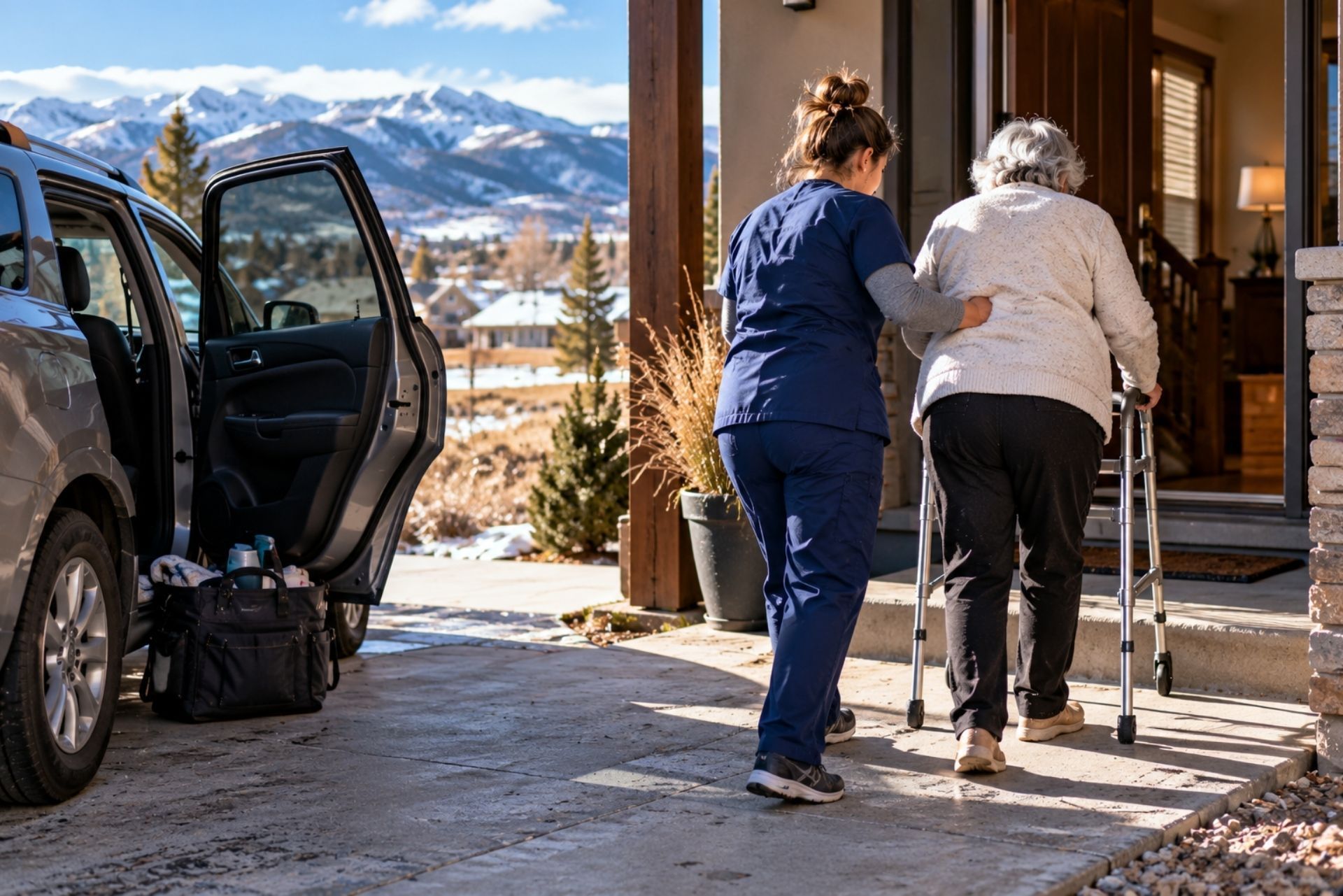
Preventing Injuries During Patient Transfers and Lifting
OSHA identifies patient transfers as the leading cause of musculoskeletal disorders among healthcare workers. In a hospital, staff have ceiling lifts, lift teams, and a second set of hands down the hall. Your aide in a Grand Junction ranch house has a narrow hallway, a low bed, and a client who weighs 80 pounds more than she does.
Picture the common scenario. A client starts to slide during a toilet transfer, and the aide instinctively catches him. She twists, strains her lumbar spine, and is off work for six weeks. Sometimes the claim grows into a herniated disc and a surgery recommendation. These cases drive loss runs for home care agencies more than any other injury type.
Before an aide's first visit, your intake assessment should document the client's weight, mobility level, and fall history, plus the home layout and available equipment. If a client requires a two-person transfer, don't staff one aide and hope for the best. That single scheduling shortcut is behind a surprising share of serious claims.
Proper Ergonomics and Assistive Device Training
Training only works when it matches the equipment aides actually encounter. Teach transfers on a Hoyer lift, gait belt, slide sheet, and transfer board, because those are what show up in client homes.
A solid program includes:
- Hands-on competency checks at hire, not just a video module.
- Annual refreshers plus retraining after any near-miss.
- A rule that aides can refuse an unsafe transfer and call a supervisor without discipline.
- Coordination with family members to get a gait belt or lift into homes that need one.
- Signed training records stored where you can produce them for your carrier.
Those records matter. Underwriters and loss control reps ask for them, and documented programs help when you're negotiating renewal terms.
Colorado employers have caught a break on base rates. The Division of Insurance approved a 6.9% decrease in average workers' compensation loss costs for 2026, the 12th consecutive year of reductions. Loss costs are the starting point carriers use before applying their own expense loads, so your actual rate may not drop by the same amount.
As a market benchmark, small Colorado home care agencies typically pay between 3% and 5% of caregiver payroll for workers' comp. An agency with $800,000 in caregiver payroll might therefore expect somewhere between $24,000 and $40,000 a year, before clerical payroll and any adjustments. Where you land depends on several variables:
- Total payroll by class code
- Your experience modification rate
- Carrier appetite for home health risk
- Scheduled credits or debits for safety programs
- Deductible choices, if offered
- Employers' liability limits
How the Experience Modifier Impacts Your Rates
The experience modification rate, or mod, compares your actual losses to those expected for agencies of your size and class. A 1.00 mod is average. A 0.85 mod lowers your premium by 15%, and a 1.25 mod raises it by 25%.
Agencies usually need to meet a minimum premium threshold before they receive a mod. Once you have one, claim frequency hurts more than severity. Five small back strains will often damage your mod more than one larger claim, which is why reporting and early return-to-work make such a big difference.
Comparison of Coverage Components and Limits
| Coverage | What It Pays For | Typical Starting Limit | Worth Upgrading? |
|---|---|---|---|
| Part One: Workers' Comp | Medical, wage loss, impairment | Statutory (no cap set by you) | Not applicable |
| Part Two: Employers' Liability | Lawsuits tied to employee injury | $100K / $500K / $100K | Often yes, to $1M |
| Hired & Non-Owned Auto | Third-party damage from aides' cars | Varies by commercial auto policy | Yes for any driving agency |
| Umbrella | Excess over employers' liability and auto | $1M+ | Yes for larger agencies |
Your workers' comp premium at the start of the year is just an estimate. After the policy ends, the carrier audits your actual payroll and bills or refunds the difference. Agencies that grew 30% during the year without updating their estimate get a painful invoice.
Prepare for your audit with these items ready:
- Quarterly 941 and Colorado unemployment filings
- Payroll registers broken out by employee and class code
- Job descriptions showing duties for each role
- Overtime records (the premium portion of overtime is often excludable when documented)
- Certificates of insurance for any subcontractors
The biggest audit fight in home care comes down to classification records. If you want an aide's companionship-only hours rated under 0917, you need timesheets that separate those hours from hands-on care. Without that detail, the auditor goes with the higher code.
Differentiating Employees from Independent Contractors
Some agencies pay caregivers as 1099 contractors to avoid comp costs. In Colorado, that's a risky bet. Under C.R.S. 8-40-202, a worker is presumed to be an employee unless she's free from your control and direction and customarily engaged in an independent trade or business.
Aides who follow your care plans, accept your scheduling, and wear your badge rarely meet that test. At audit, the carrier will add their payroll to your premium. Worse, an injured "contractor" can file a claim and argue she's your employee. If you truly use contractors, collect certificates of insurance showing their own workers' comp coverage, or expect to pay for them.
Handling Claims and Return-to-Work Programs
How you handle the first 48 hours after an injury shapes the rest of the claim. Colorado lets employers direct initial medical care through a designated provider list, so your aide sees an occupational medicine clinic that understands work restrictions rather than a random urgent care.
Return-to-work is where home care agencies have an edge they often ignore. An aide with a 10-pound lifting restriction can't do transfers, but she can make welfare check calls, train new hires on documentation, or provide companionship-only visits. Each week she works modified duty is a week of wage benefits you don't pay. That protects your mod.
Watch out for a common mistake. Agencies sometimes pay injured aides "off the books" to keep a minor claim off the policy. That breaks reporting rules, and if the injury worsens, you've lost control of medical care and documentation.
Reporting Requirements for Colorado Employers
Colorado has firm deadlines. Injured employees should give written notice of a work injury within 10 working days. Employers must file a First Report of Injury with their carrier, and injuries causing lost time beyond three shifts, permanent impairment, or death must be reported to the Division within 10 days of notice.
Keep the Division's employer communications on your radar, since filing procedures and forms change. Late reporting can trigger penalties and weakens your defense if the claim is disputed.
Common Questions About Caregiver Insurance
Do I need workers' comp if I only have two part-time aides? Yes. Colorado requires coverage for virtually any employer with one or more employees, regardless of hours worked.
Is my aide covered if she slips on ice walking into a client's house? Generally, yes. Walking into a client's home is part of the job, and icy steps in Colorado winters produce plenty of these claims.
Does workers' comp cover a car accident between client visits? It usually covers your aide's injuries. Damage to the vehicles and the other driver's injuries need to be addressed by auto insurance, ideally including hired and non-owned coverage.
What's the cheapest way to lower my workers' comp premium? Classify payroll correctly, separate clerical staff, and keep claims small through training and modified duty. Those three steps usually beat shopping on price alone.
Can family caregivers paid through a Medicaid program be covered? It depends on who the legal employer is under the program. Clarify that with your fiscal agent and your insurance agent before an injury happens.
Why did my audit bill come in so high? Usually payroll grew faster than your estimate, or aides were moved into a higher class code. Update your carrier mid-term when payroll changes significantly.
Protecting Your Agency and Your Staff Long-Term
Colorado home care agencies sit in a decent rate environment, with a 12-year trend of falling loss costs. That only helps you if your own house is in order. Correct class codes, documented transfer training, realistic drive schedules, and fast claim reporting are what separate an agency with a 0.80 mod from one paying a 30% surcharge.
Work with an independent agent who knows home health and can compare quotes from at least three carriers with an appetite for 8835 risk. Generic out-of-state policies often miss audit nuances and auto gaps that matter here. Treat your aides' backs and driving records as assets, because they're the biggest drivers of what you'll pay next year.
Your next step: pull last year's audit and payroll records this week, check every employee's class code, and schedule a coverage review before your next renewal.
About The Author: Andy Roy
As Owner and Agent at Pure Risk Advisors, I’ve spent over three decades helping clients find reliable, affordable coverage they can count on. Licensed in Arizona, Colorado, and Wyoming, I take pride in offering personalized service and practical solutions that fit each client’s unique needs—backed by years of experience and a genuine commitment to my community.
Your Personal Insurance Solutions in Colorado
Our team of experts is dedicated to understanding your unique needs and crafting tailored insurance solutions to safeguard your most valued assets, providing you with the confidence and peace of mind you deserve.
3R Personal Insurance Agency
Why Work With 3R Insurance
Choose 3R Insurance and unlock a world of personalized, expert-driven insurance solutions tailored to protect what matters most to you. Experience unparalleled choice, transparency, and ongoing support as our dedicated agents guide you through your insurance journey, ensuring you receive the best coverage at competitive prices.

Choice & Transparency
At 3R Insurance, our independent agents set themselves apart from traditional insurance company agents by working for you, not the insurer. As independent agents, they have the flexibility to offer a diverse range of policies tailored to your unique needs.

Your Advocate
Our independent agents are committed to providing the best coverage suited for your individual requirements. They work diligently to align your insurance needs with your budget, ensuring you receive top-quality coverage at an affordable price.

Lifetime Expert Advice
With a wealth of industry knowledge, our independent insurance agents are true experts, capable of clarifying complex policies and rate changes. Their extensive experience with multiple insurance providers makes them reliable sources of information, offering invaluable guidance and support throughout your insurance journey. Experience the 3R Insurance difference with our commitment to choice, transparency, and exceptional service.
How To File A Insurance Claim in Colorado
Report the Incident
Promptly contact 3R Insurance to report the incident that led to the need for filing a claim. Provide accurate and detailed information about the circumstances, including the date, location, and any individuals involved. This timely reporting helps ensure the claims process proceeds as smoothly and efficiently as possible.
Gather Documentation
Collect any relevant documentation to support your claim, such as photos, videos, police reports, and witness statements. Organizing this evidence will help strengthen your claim and expedite the evaluation process, allowing our dedicated claims team to assess the situation and determine the appropriate compensation.
Stay in Touch and Cooperate
Keep an open line of communication with your 3R Insurance agent during the claims process. Respond to any requests for additional information or clarification promptly, and be prepared to work closely with our team to ensure a fair and timely resolution. Our goal is to provide exceptional support and guidance throughout the entire claims experience.
Safeguarding What Matters to You with Personal Insurance

Craig C.
Personal Insurance Client
Beth is awesome and brings incredible customer service and a willingness to help with new drivers. I receive and appreciate the emails I find in my inbox about policy renewals. Beth and her team make is easy to connect with and understand my multi-coverage policy.
Rebecca V.
Personal Insurance Client
3R Insurance Agency is the best insurance agency hands down. Customer service is great. They have resolved more issues over the years than I can count. Simply amazing!
Michelle M.
Personal Insurance Client
I have been with 3R insurance for years and have always had great success. Beth Woodward has always been helpful in getting the best insurance and rates for me.