
Colorado Workers' Compensation Insurance for Roofers

8:30am - 5:00pm Mon-Fri
We'll Reply in 15min*
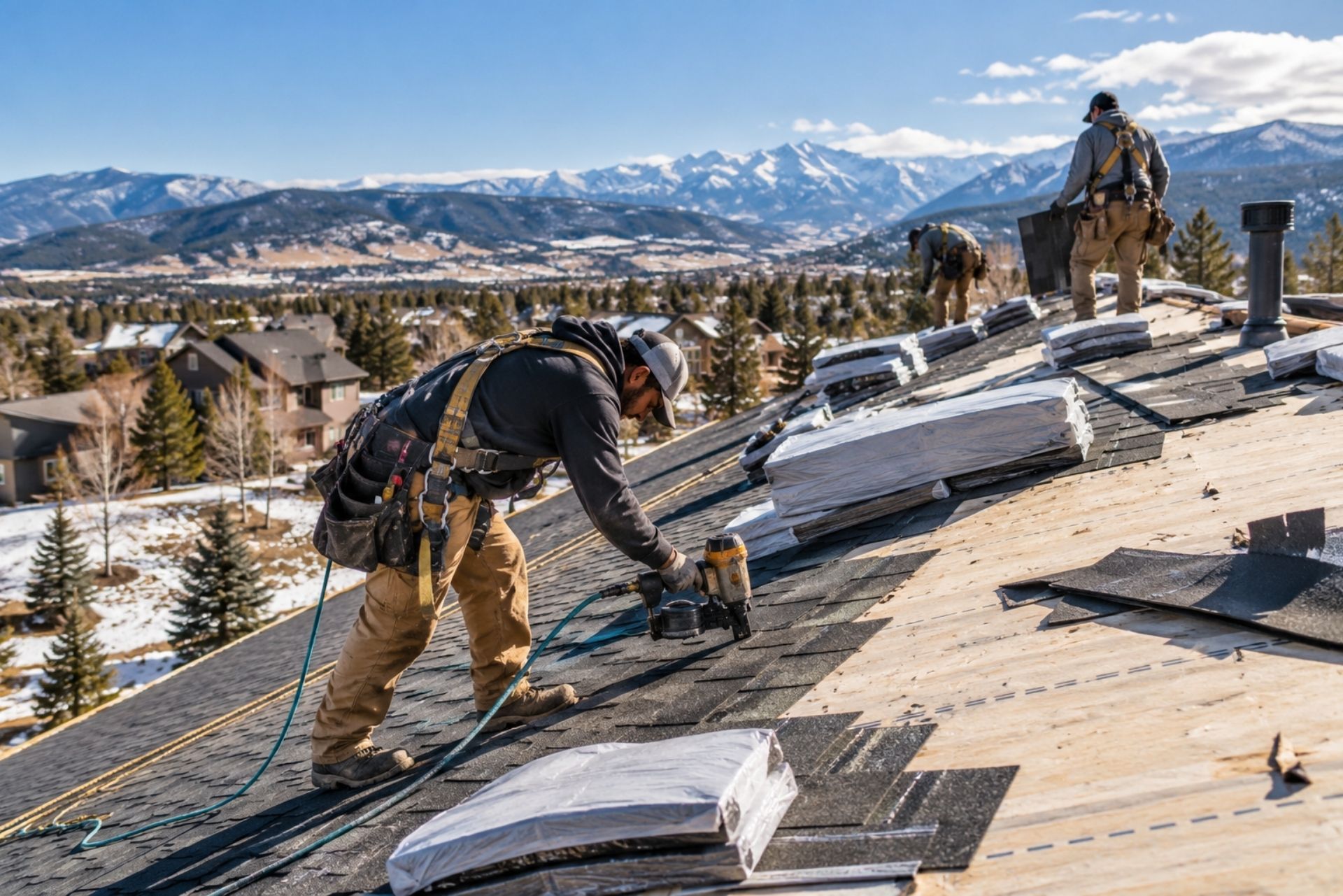
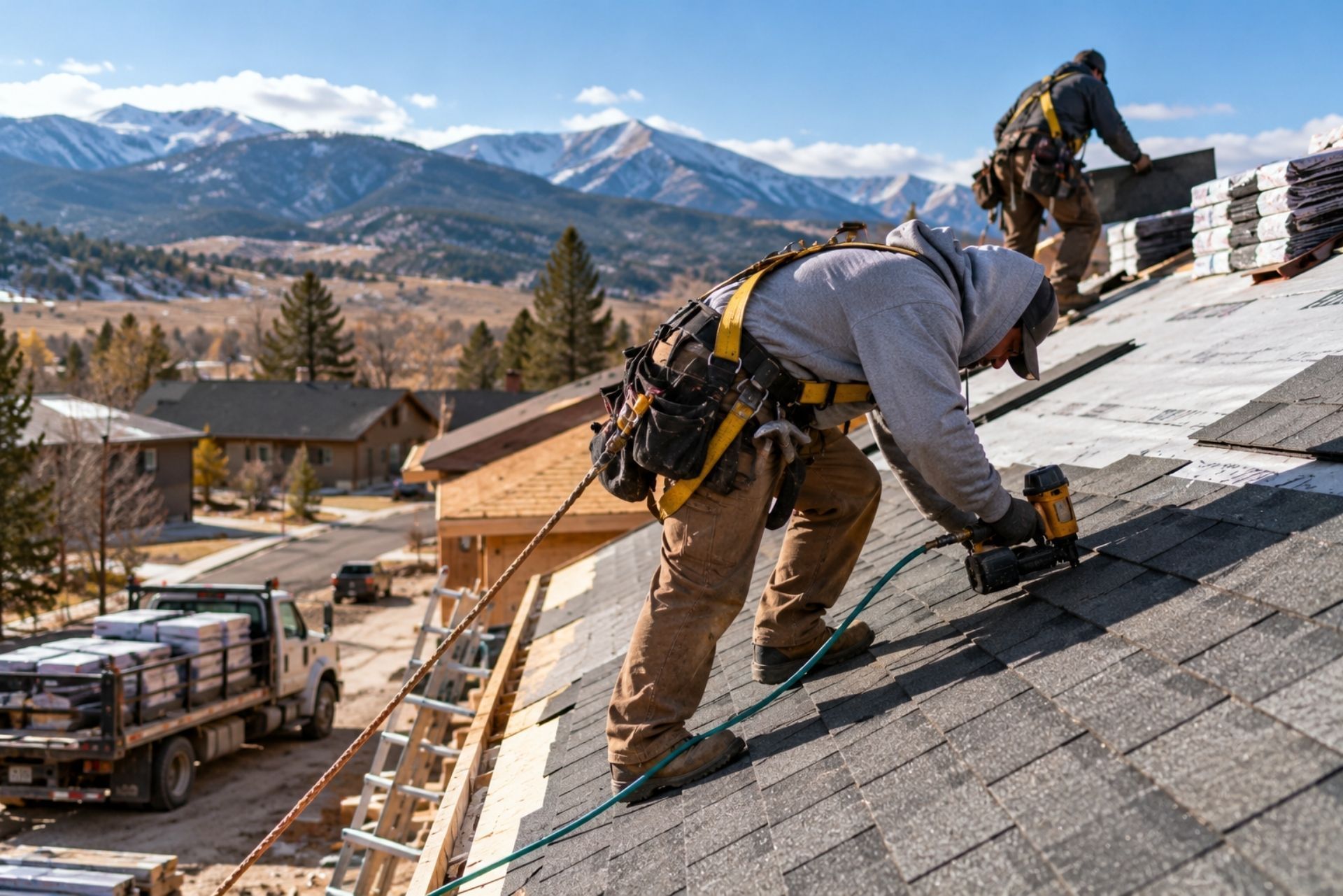
Picture a three-person crew tearing off a steep hip roof in Castle Rock in late October. One worker steps onto a patch of frost-slicked felt, slides past an anchor he never clipped into, and lands on a concrete driveway. Within a week, the owner is dealing with medical bills, lost-time benefits, an OSHA inquiry, and a premium that will climb at the next renewal.
That's the reality behind Colorado workers' compensation insurance for roofers. Roofing sits in one of the most expensive classifications in the state, and small errors in how you report payroll, classify workers, or document safety can cost you thousands each year.
The good news is that most of these costs are controllable once you understand how the system works. The contractors who pay the least aren't lucky. They understand class codes, protect their experience mod, show up to audits organized, and shop their coverage with brokers who know which carriers want
roofing business.
The Essentials of Colorado Workers' Comp for Roofing Contractors
Colorado requires nearly every employer with even one employee to carry workers' compensation under the Colorado Workers' Compensation Act (C.R.S. Title 8, Articles 40 through 47). For roofers, there's no realistic way around it. A homeowner in Aurora or a general contractor in Fort Collins won't let your crew on site without a certificate, and the Division of Workers' Compensation can fine uninsured employers for each day they operate without coverage.
A standard policy has two parts. Part One pays the statutory benefits: medical care, temporary disability wages, permanent impairment, and death benefits. Part Two, employer's liability, covers lawsuits that fall outside the comp system, such as a third-party-over action where an injured worker sues a GC who then pulls you in.
Benefits have small details that add up. Effective January 1, 2026, the mileage reimbursement rate for injured workers driving to medical appointments rose to $0.63 per mile. That sounds minor until a worker in Alamosa needs months of physical therapy in Pueblo.
Treatment rules are shifting too. The Division adopted
updates to Rule 16 utilization standards taking effect January 1, 2027, which define what counts as reasonable and necessary care. Here's what that means for you: claims opened in late 2026 may be managed under new treatment guidelines, so talk with your carrier about how they'll handle the transition.

By: Andy Roy
Owner & Agent
Mastering NCCI Class Codes: 5551 vs. 5538
Colorado uses the National Council on Compensation Insurance (NCCI) classification system, and your class code drives your rate more than any other factor. Code 5551 covers roofing of all kinds, including shingle, tile, metal, membrane, and the yard work tied to it. Effective January 1, 2026, the Colorado Division of Insurance approved an advisory loss cost of $5.404 per $100 of payroll for 5551.
To put that in practical terms, a crew with $500,000 in annual roofing payroll starts with about $27,020 in loss costs. That's before the carrier applies its loss cost multiplier, your experience mod, schedule credits, and taxes or fees. Your actual premium will land above that base figure.
Code 5538 is a different animal. It covers sheet metal work, including installation of gutters, downspouts, flashing, and HVAC ductwork in some contexts. Some contractors who install seamless gutters, metal trim, or standalone flashing assume that work belongs in 5538 rather than 5551.
The catch is that NCCI doesn't let you split payroll just because one task sounds different. If an employee spends the morning installing standing seam panels and the afternoon hanging gutters on the same project, the auditor will likely place all of that wage in 5551 unless your records clearly separate the work.
Common Classification Errors and Overpayments
Misclassification cuts both ways. Some roofers overpay, and some underpay and then get hit with a large audit bill. The most frequent mistakes we see:
- Clerical staff lumped into 5551. Your office manager who never climbs a ladder belongs in 8810 (clerical office), one of the cheapest codes available.
- Estimators and salespeople coded as roofers. Outside sales staff can often go into 8742 if they don't perform physical work.
- No payroll separation for gutter or sheet metal crews. Without timesheets by task, everything defaults to the highest rated code.
- Owners included or excluded incorrectly. Corporate officers and LLC members may be able to reject coverage in Colorado, but the paperwork has to be filed properly.
Pay attention to Senate Bill 26-093, which
strengthens enforcement against employee misclassification. Treating crew members as 1099 contractors to dodge premium is riskier in 2026 than it's ever been.
The Financial Impact of Fall Claims and Safety Culture
Falls drive roofing comp costs, plain and simple. In the 2024 reporting period, released in 2026, Colorado recorded 22 construction fatalities, with 10 caused by falls, slips, or trips. Nearly half of the state's construction deaths came from the same hazard your crew faces every day.
Regulators know it. Federal OSHA data for the fiscal year ending September 30, 2025, shows roofing contractors received 10,644 citations, with "Duty to Have Fall Protection" making up 34.7% of them. Fall protection is the single most cited issue in your trade.
A serious fall claim rarely stays small. Think of a worker who fractures a pelvis and wrist after slipping off a two-story roof in Lakewood. You're looking at emergency care, surgery, months of temporary disability, possible permanent impairment, and vocational issues if he can't return to roofing. That one claim can follow your mod for three years.
Safety culture matters because underwriters see it. Carriers that write roofing ask about written fall protection plans, harness inspections, toolbox talks, and whether you've had OSHA visits. A contractor who can hand over signed training logs gets a very different reception than one who says "we're careful."
Cost Comparison: Safety Program vs. Claim Payouts
| Factor | Investing in Safety | Absorbing a Fall Claim |
|---|---|---|
| Upfront spend | Harnesses, anchors, guardrails, training time | Usually none until an injury |
| Premium effect | May qualify for schedule credits | Mod increase for about three years |
| OSHA exposure | Lower citation risk | Inspection likely after serious injury |
| Bidding | Clean mod helps win GC work | High mod can disqualify you |
| Crew impact | Retention and morale | Lost worker, retraining, delays |
We won't invent dollar figures for this table, because equipment and claim costs vary widely. The pattern holds, though: safety spending is predictable and one-time, while claim costs compound through premium, lost bids, and lost production.
Your experience modification rate compares your actual losses to what NCCI expects for a business of your size and class. A 1.00 mod is average. A 0.85 mod means you pay 15% less than the base, while a 1.30 mod adds 30% to your manual premium.
NCCI typically uses three years of loss data, skipping the most recent year. So an injury in 2026 can affect your mod into 2029 or 2030. That's why a single bad fall is so punishing for small roofing firms with limited payroll to absorb it.
Frequency often hurts more than severity. NCCI's formula weighs the first portion of each claim heavily, so five small claims can push your mod up faster than one large one. A worker with a nail-gun puncture who gets a quick clinic visit still adds to your loss history.
Some practical moves to protect your mod:
- Report every injury to your carrier promptly. Late reporting increases claim costs.
- Build a return-to-work program with light duty, like material staging or ground cleanup, to cut lost-time payments.
- Request your loss runs annually and check for closed claims still carrying open reserves.
- Ask your agent to review your mod worksheet before renewal, not after.
Legislation is also in play. Senate Bill 26-175, enacted in June 2026, addresses how an employer's experience modification factor is adjusted. Ask your broker how it applies to your next rating date, since NCCI publishes
anticipated effective dates for state changes.
Your premium at the start of the policy is an estimate. At year end, the carrier audits your actual payroll and adjusts the bill. If you estimated $400,000 in roofing payroll and actually paid $550,000, expect an invoice for the difference at the 5551 rate.
That surprise bill is the most common complaint we hear from roofing owners. A strong storm season after a Front Range hail event can double your workload in a few months, and your comp estimate falls behind fast. One thing to keep in mind: you can ask your carrier to endorse the policy midterm when payroll jumps, spreading the cost instead of facing one large audit balance.
Audits can be physical, by phone, or self-reported by mail. For roofing, carriers often prefer in-person or virtual audits because subcontracting and classification questions are common.
Subcontractor Certificates of Insurance (COI)
This is where roofers lose the most money at audit. If you pay a subcontractor and can't produce a valid certificate showing they carried their own comp during the work period, the auditor can add that subcontractor's payments to your payroll, usually at 5551.
Picture paying a tear-off crew $80,000 over the summer, only to learn their policy lapsed in June. Every dollar paid after the lapse may become premium on your policy. Collect certificates before any work starts, verify the dates cover the full job, and recheck at renewal. A certificate dated last year doesn't protect you this year.
Some subs may hold a Colorado rejection of coverage as a sole proprietor. Keep that documentation in the same file.
Preparing Your Records for an Auditor
Auditors work faster and more favorably with organized contractors. Have these ready:
- Payroll journals and quarterly 941s and Colorado UI reports
- Timesheets showing hours split by class code
- 1099s and the matching subcontractor certificates
- General ledger showing casual labor and cash payments
- Overtime records, since the premium portion of overtime is often excludable in Colorado
Review the auditor's worksheet before signing. Errors happen, and disputing them after the fact is harder.
Carrier Appetite and Finding Competitive Rates in Colorado
Not every carrier wants roofing. Many standard markets limit or decline 5551 entirely, especially for new ventures, crews doing steep-slope residential work, or contractors with recent fall claims. Others will write roofing only if commercial low-slope work dominates your revenue mix.
Your options generally fall into three tiers. Preferred carriers take established roofers with clean mods and documented safety programs. Specialty and regional markets accept more risk at higher rates. Pinnacol Assurance serves as Colorado's insurer of last resort, so a roofer can always find coverage, though not always cheaply.
Underwriters will ask detailed questions about your operation. Expect inquiries about maximum working height, the split between residential and commercial work, use of subcontractors, years in business, and whether you do torch-down or hot tar applications. Answer honestly. Misrepresenting your operation can lead to cancellation or a disputed claim.
This matters because the gap between markets is real. Two roofers with identical payroll can see very different premiums based on the loss cost multiplier a carrier applies and the schedule credits it's willing to give.
Work with an independent agent who places roofing regularly and can approach several carriers at once. Compare at least three quotes, and don't judge them on price alone. Ask about audit practices, claim handling, and whether the carrier offers safety consultation. A generic out-of-state policy bought online often misses Colorado-specific endorsements and classification nuances.
Common Questions About Roofing Insurance
Do I need workers' comp if I only have one part-time employee? Yes. Colorado generally requires coverage for any employee, full or part time, and fines for operating uninsured can stack up daily.
Can I skip coverage for myself as the owner? Often yes, if you're a corporate officer or LLC member and file the proper rejection. Many roofers still keep themselves covered, since a personal health policy may deny a work-related fall.
Will my general liability policy cover a worker who gets hurt? No. General liability usually excludes employee injuries, which is exactly why you need workers' comp and employer's liability.
Why did I get a big bill after my audit? Your actual payroll was likely higher than the estimate, or uninsured subcontractor payments were added. Midterm payroll updates and collecting certificates prevent most of these surprises.
How long does one claim affect my rates? Typically about three years through your experience mod. Small, frequent claims can raise it as much as a single large one.
Is my gutter installer coded differently than my roofers?
Possibly, if that employee does only sheet metal work and you track hours separately. Without clear records, the auditor may assign everything to 5551.
Before You Buy a Policy
Roofing comp in Colorado rewards contractors who manage it actively. Your class code sets the base rate, your fall prevention efforts shape your mod, your records decide how the audit goes, and your broker's market access determines what you actually pay. Ignoring any one of these quietly drains profit.
Before signing anything, pull your last three years of loss runs, confirm every employee is in the right classification, and gather current certificates from every sub you plan to use this season. Then ask an independent agent to shop your coverage with carriers that actively write roofing in Colorado.
These practical steps for Colorado roofing comp coverage won't stop every fall. They will make sure that when something does go wrong on a roof in Denver or Grand Junction, your policy responds the way you expect and your business stays standing.
About The Author: Andy Roy
As Owner and Agent at Pure Risk Advisors, I’ve spent over three decades helping clients find reliable, affordable coverage they can count on. Licensed in Arizona, Colorado, and Wyoming, I take pride in offering personalized service and practical solutions that fit each client’s unique needs—backed by years of experience and a genuine commitment to my community.
Your Personal Insurance Solutions in Colorado
Our team of experts is dedicated to understanding your unique needs and crafting tailored insurance solutions to safeguard your most valued assets, providing you with the confidence and peace of mind you deserve.
3R Personal Insurance Agency
Why Work With 3R Insurance
Choose 3R Insurance and unlock a world of personalized, expert-driven insurance solutions tailored to protect what matters most to you. Experience unparalleled choice, transparency, and ongoing support as our dedicated agents guide you through your insurance journey, ensuring you receive the best coverage at competitive prices.

Choice & Transparency
At 3R Insurance, our independent agents set themselves apart from traditional insurance company agents by working for you, not the insurer. As independent agents, they have the flexibility to offer a diverse range of policies tailored to your unique needs.

Your Advocate
Our independent agents are committed to providing the best coverage suited for your individual requirements. They work diligently to align your insurance needs with your budget, ensuring you receive top-quality coverage at an affordable price.

Lifetime Expert Advice
With a wealth of industry knowledge, our independent insurance agents are true experts, capable of clarifying complex policies and rate changes. Their extensive experience with multiple insurance providers makes them reliable sources of information, offering invaluable guidance and support throughout your insurance journey. Experience the 3R Insurance difference with our commitment to choice, transparency, and exceptional service.
How To File A Insurance Claim in Colorado
Report the Incident
Promptly contact 3R Insurance to report the incident that led to the need for filing a claim. Provide accurate and detailed information about the circumstances, including the date, location, and any individuals involved. This timely reporting helps ensure the claims process proceeds as smoothly and efficiently as possible.
Gather Documentation
Collect any relevant documentation to support your claim, such as photos, videos, police reports, and witness statements. Organizing this evidence will help strengthen your claim and expedite the evaluation process, allowing our dedicated claims team to assess the situation and determine the appropriate compensation.
Stay in Touch and Cooperate
Keep an open line of communication with your 3R Insurance agent during the claims process. Respond to any requests for additional information or clarification promptly, and be prepared to work closely with our team to ensure a fair and timely resolution. Our goal is to provide exceptional support and guidance throughout the entire claims experience.
Safeguarding What Matters to You with Personal Insurance

Craig C.
Personal Insurance Client
Beth is awesome and brings incredible customer service and a willingness to help with new drivers. I receive and appreciate the emails I find in my inbox about policy renewals. Beth and her team make is easy to connect with and understand my multi-coverage policy.
Rebecca V.
Personal Insurance Client
3R Insurance Agency is the best insurance agency hands down. Customer service is great. They have resolved more issues over the years than I can count. Simply amazing!
Michelle M.
Personal Insurance Client
I have been with 3R insurance for years and have always had great success. Beth Woodward has always been helpful in getting the best insurance and rates for me.