
Tree Service Insurance

8:30am - 5:00pm Mon-Fri
We'll Reply in 15min*
A single afternoon can change everything for a tree service business. One miscalculated cut sends a 2,000-pound limb through a client's roof, and suddenly you're staring at a six-figure repair bill, a furious homeowner, and a business that might not survive the fallout. Tree service insurance exists for exactly this reason, but too many operators carry the wrong coverage or not enough of it. The average liability claim for tree care businesses in 2026 sits at
$12,800 per incident, and that's just the average. Structural damage claims involving roofs, vehicles, or utility lines can easily triple or quadruple that figure. Understanding what a single property damage claim can actually cost you, from the initial repair bill to the legal fees and lost contracts, is the difference between a rough quarter and a closed business. This piece breaks down those real costs, walks through the most common claim scenarios, and helps you figure out whether your current policy actually has your back.
The Real Cost of a Single Property Damage Incident
Most tree service owners think about property damage in simple terms: you break it, you fix it. But the true cost of a single incident stacks up fast across multiple categories, and many of those costs hit you whether or not you carry insurance.
Direct Repair and Replacement Expenses
The most obvious expense is the physical damage itself. A mature oak limb dropping onto a shingled roof can easily run $15,000 to $45,000 in repairs depending on the extent of structural damage. If that same limb clips a parked vehicle on the way down, you're adding another $5,000 to $20,000.
These numbers assume straightforward repairs. When a tree falls through a living space and displaces a family, you may also be responsible for temporary housing costs, which can run $150 to $300 per night. Damage to landscaping, fencing, driveways, and irrigation systems adds even more. One claim we've seen involved a crew dropping a red oak that crushed a client's custom stone patio and in-ground pool enclosure: the total repair bill exceeded $87,000 before legal fees entered the picture.
Legal Fees and Settlement Costs
Even if you're clearly at fault and want to make things right, the homeowner's insurance company will often pursue subrogation against your business. That means their lawyers come after you to recover what they paid out.
Defense attorney fees in property damage cases typically range from $10,000 to $50,000, depending on the complexity and jurisdiction. If the case goes to mediation or trial, costs climb further. Many states also allow the claimant to recover attorney fees if they prevail, doubling your legal exposure. A $30,000 repair can easily become a $60,000 to $80,000 total outlay once legal costs are factored in.
The Hidden Price of Reputation Damage
This is the cost that doesn't show up on any invoice. A single viral social media post showing your crew's mistake can tank your Google reviews and scare off prospective clients for months. In a referral-driven industry like tree care, reputation is revenue.
Some operators report losing 20% to 30% of their pipeline after a high-profile incident, even when insurance covers the claim entirely. Property managers and HOAs often require proof of claims history before awarding contracts. One bad claim on your record can disqualify you from the most profitable commercial work in your area for years.

By: Andy Roy
Owner & Agent
Not all property damage claims look the same. The type of work you're doing and the environment around the job site determine your risk profile.
Structural Damage from Falling Limbs
This is the most frequent and most expensive category. Crane-assisted removals near occupied structures carry the highest risk, but even routine pruning jobs go sideways. A crew trimming a silver maple over a two-story colonial might misjudge a limb's weight, sending it through a second-floor window and into a bedroom.
Typical structural damage claims break down like this: roof damage averages $18,000 to $35,000, window and siding damage runs $3,000 to $12,000, and interior damage from water intrusion after a roof breach can add $10,000 or more. The TCIA's hazard tree assessment guidelines stress that proper pre-job site evaluation can prevent many of these incidents, but mistakes still happen to even experienced crews.
Underground Utility and Hardscape Damage
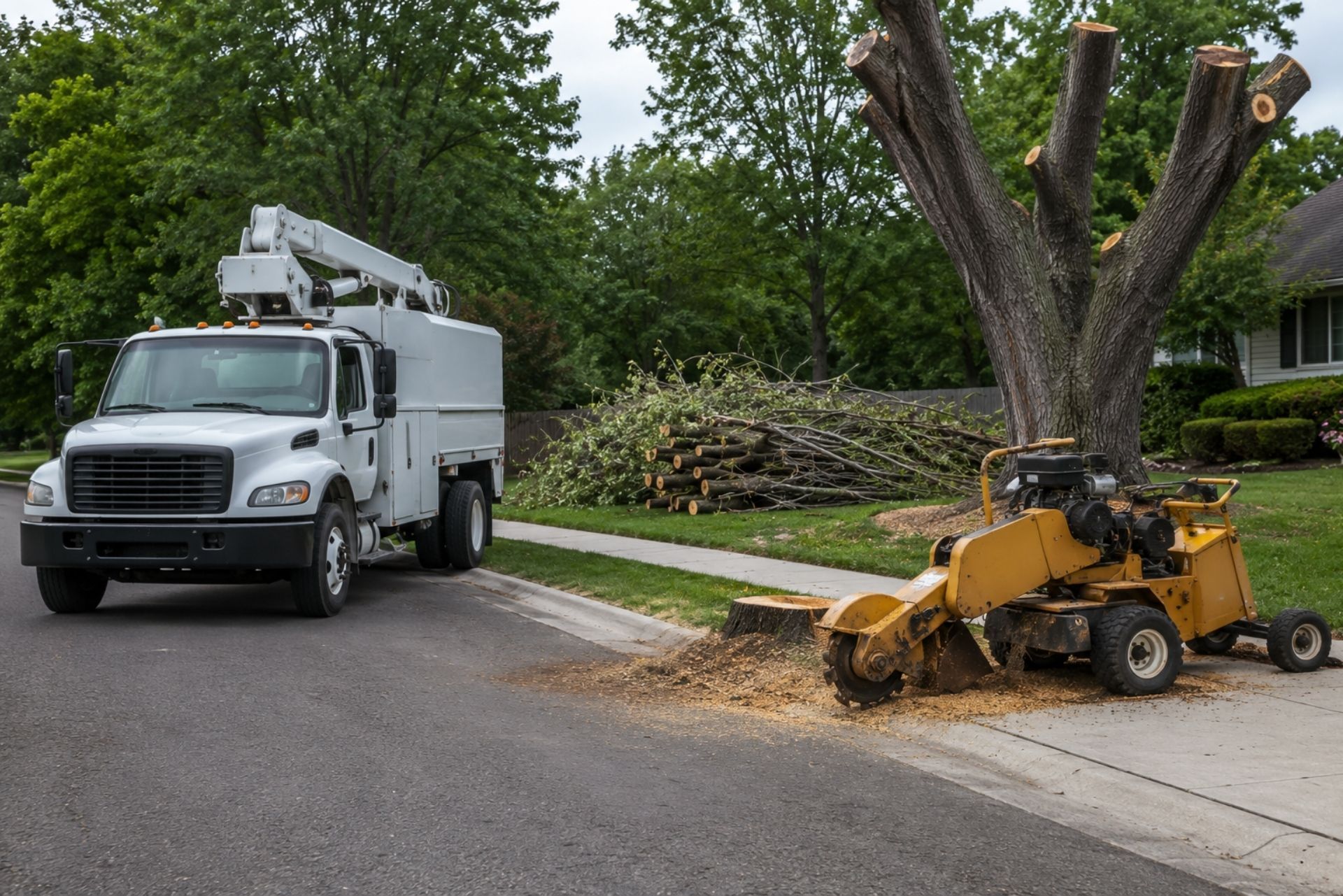
Stump grinding and root removal create a different kind of exposure. Hitting a buried gas line, fiber optic cable, or irrigation main can trigger costs that dwarf above-ground damage. A severed gas line requires emergency response, evacuation, and repair, often totaling $25,000 to $75,000 depending on the utility and municipality.
Hardscape damage is more common but still expensive. Stump grinders can crack driveways, shatter retaining walls, and destroy buried sprinkler systems. These claims typically fall in the $5,000 to $20,000 range, but they add up quickly if your crew works residential neighborhoods where utilities and hardscaping are dense.
Comparing Coverage: General Liability vs. Full Protection
Your general liability policy is your first line of defense, but it's rarely your last. Understanding the gap between basic and comprehensive coverage helps you avoid the most dangerous assumption in this business: thinking you're covered when you're not.
Comparison Table: Basic vs. Comprehensive Tree Care Insurance
| Coverage Feature | Basic General Liability | Comprehensive Tree Care Package |
|---|---|---|
| Third-party property damage | Yes, up to policy limit | Yes, up to policy limit |
| Completed operations | Often limited or excluded | Included |
| Equipment theft/damage | No | Yes (inland marine) |
| Professional errors (consulting) | No | Yes (E&O policy) |
| Pollution/herbicide damage | Typically excluded | Available as endorsement |
| Care, custody, and control | Excluded | Available as endorsement |
| Typical annual premium | $1,200 - $3,500 | $4,000 - $9,000+ |
The "care, custody, and control" exclusion is one of the most misunderstood gaps in tree service insurance. Standard GL policies exclude damage to property that's in your care or that you're working on. If you're removing a tree and damage the client's fence that you moved to access the job site, your basic GL policy
may deny that claim entirely. You need a specific endorsement to close that gap.
Why General Liability Isn't Always Enough
A general liability policy handles the basics: someone gets hurt on a job site, or your crew damages a neighbor's property. But tree care involves specialized risks that standard GL policies weren't designed to cover.
Errors and Omissions for Consulting Arborists
If you provide tree health assessments, write reports for municipalities, or advise property owners on which trees to remove, you're offering professional services. A missed diagnosis of a hazardous tree that later falls and injures someone creates a professional liability exposure that GL won't touch.
Errors and omissions coverage, sometimes called professional liability, protects you when your expert judgment turns out to be wrong. Premiums for arborist E&O policies typically run $800 to $2,500 annually, a fraction of what a single negligence claim would cost. Any ISA-certified arborist doing consulting work should carry this coverage as standard practice.
Inland Marine for High-Value Equipment
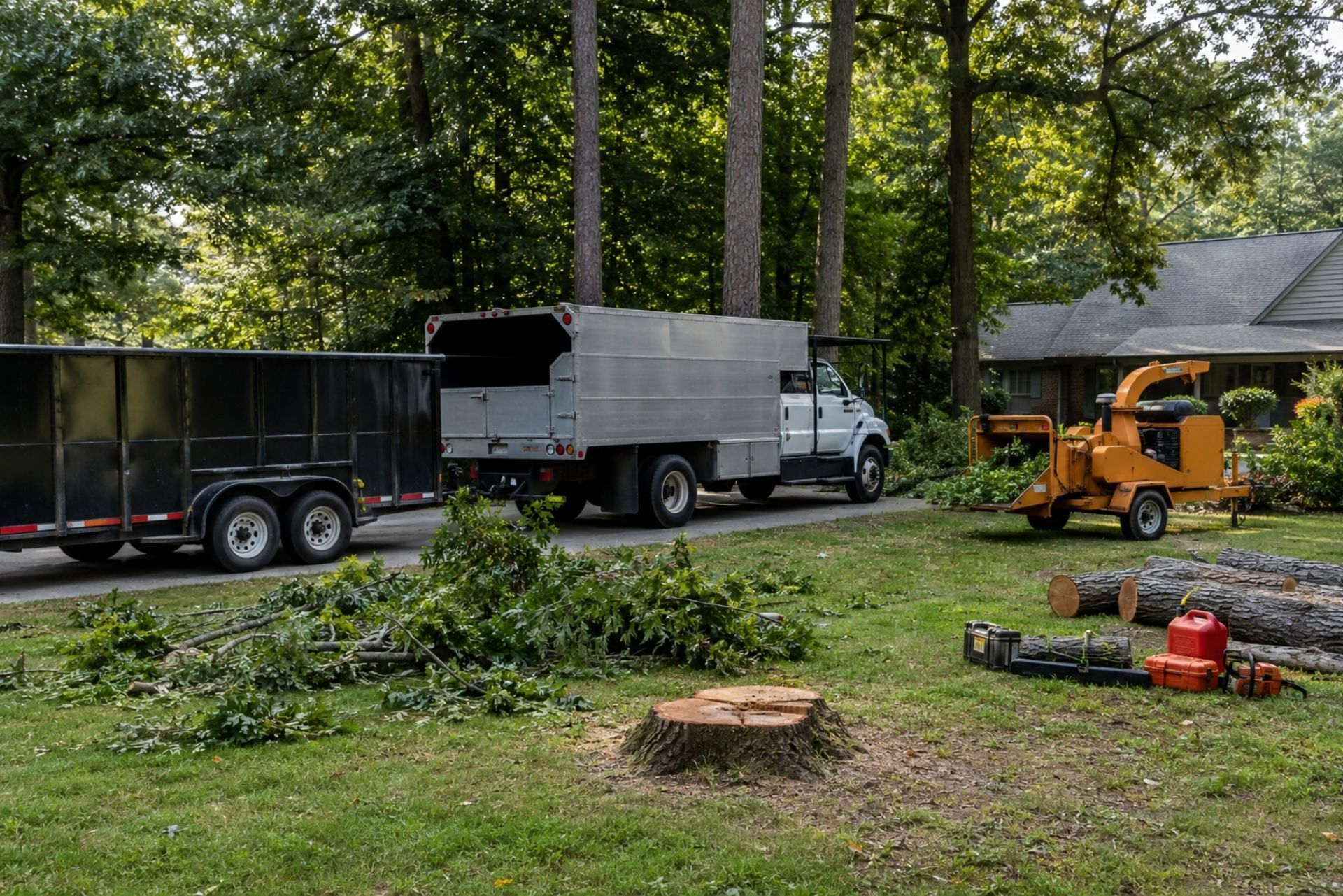
Your chipper, crane, stump grinder, and chainsaws represent tens of thousands of dollars in capital. A standard business property policy covers equipment at your shop or yard, but tree service equipment spends most of its life on trailers and job sites. That's where inland marine coverage steps in.
Inland marine policies cover equipment in transit and at temporary locations. A stolen Vermeer chipper worth $45,000 or a bucket truck damaged in a highway accident can be replaced without draining your operating capital. The
typical cost of tree service insurance increases modestly when you add inland marine, usually $500 to $1,500 per year depending on total equipment value. That's a small price compared to replacing a $60,000 grapple truck out of pocket.
Common Questions About Tree Service Insurance
FAQ: Coverage Limits, Deductibles, and Claims
How much general liability coverage do I actually need? Most residential tree service companies should carry at least $1 million per occurrence and $2 million aggregate. If you do commercial or municipal work, contract requirements often push that to $2 million per occurrence. The best GL insurance options for tree services in 2026 start at these thresholds.
What's a typical deductible for property damage claims? Deductibles on GL policies for tree care businesses usually range from $500 to $2,500. A higher deductible lowers your premium but means more out-of-pocket cost per claim. If your crew files even one claim per year, the premium savings from a high deductible often aren't worth it.
Will my rates go up after a single claim? Almost certainly, yes. Most carriers reassess your premium at renewal based on claims history. A single property damage claim can increase your annual premium by 15% to 40%, and some carriers may non-renew your policy entirely if the claim is large enough.
Does my personal auto insurance cover my work truck? No. Personal auto policies exclude vehicles used for commercial purposes. If your crew drives a personal pickup to job sites with equipment in the bed, any accident during work hours will likely result in a denied claim. You need a commercial auto policy.
Do I need separate coverage for each crew? Not necessarily, but your policy needs to reflect the number of employees and crews you operate. Underreporting your workforce is one of the fastest ways to get a claim denied. Be honest with your agent about crew size, subcontractor use, and the types of jobs you take on.
What if a subcontractor I hired causes the damage? You can still be held liable. Most property owners and their insurers will pursue the general contractor, which is you, regardless of who actually caused the damage. Always require certificates of insurance from subcontractors and verify their coverage is active before they set foot on your job site.
Protecting Your Business Bottom Line
A single property damage claim can cost a tree service business anywhere from $12,000 to well over $100,000 when you add up repairs, legal fees, premium increases, and lost revenue. The operators who survive these incidents aren't necessarily luckier or more skilled. They're better insured.
The right insurance package for a tree care company goes beyond a basic GL policy. It includes inland marine for your equipment, E&O coverage if you consult, proper auto coverage for your fleet, and endorsements that close common exclusion gaps like care, custody, and control. Review your policy annually with an agent who understands tree care, not a generalist who also writes policies for restaurants and retail shops.
Get at least three quotes from carriers experienced in tree service insurance, compare what's actually covered rather than just the premium price, and make sure your limits match the value of the properties you work near. The cost of proper coverage is predictable. The cost of being underinsured is not.
About The Author: Andy Roy
As Owner and Agent at Pure Risk Advisors, I’ve spent over three decades helping clients find reliable, affordable coverage they can count on. Licensed in Arizona, Colorado, and Wyoming, I take pride in offering personalized service and practical solutions that fit each client’s unique needs—backed by years of experience and a genuine commitment to my community.
Your Personal Insurance Solutions in Colorado
Our team of experts is dedicated to understanding your unique needs and crafting tailored insurance solutions to safeguard your most valued assets, providing you with the confidence and peace of mind you deserve.
3R Personal Insurance Agency
Why Work With 3R Insurance
Choose 3R Insurance and unlock a world of personalized, expert-driven insurance solutions tailored to protect what matters most to you. Experience unparalleled choice, transparency, and ongoing support as our dedicated agents guide you through your insurance journey, ensuring you receive the best coverage at competitive prices.

Choice & Transparency
At 3R Insurance, our independent agents set themselves apart from traditional insurance company agents by working for you, not the insurer. As independent agents, they have the flexibility to offer a diverse range of policies tailored to your unique needs.

Your Advocate
Our independent agents are committed to providing the best coverage suited for your individual requirements. They work diligently to align your insurance needs with your budget, ensuring you receive top-quality coverage at an affordable price.

Lifetime Expert Advice
With a wealth of industry knowledge, our independent insurance agents are true experts, capable of clarifying complex policies and rate changes. Their extensive experience with multiple insurance providers makes them reliable sources of information, offering invaluable guidance and support throughout your insurance journey. Experience the 3R Insurance difference with our commitment to choice, transparency, and exceptional service.
How To File A Insurance Claim in Colorado
Report the Incident
Promptly contact 3R Insurance to report the incident that led to the need for filing a claim. Provide accurate and detailed information about the circumstances, including the date, location, and any individuals involved. This timely reporting helps ensure the claims process proceeds as smoothly and efficiently as possible.
Gather Documentation
Collect any relevant documentation to support your claim, such as photos, videos, police reports, and witness statements. Organizing this evidence will help strengthen your claim and expedite the evaluation process, allowing our dedicated claims team to assess the situation and determine the appropriate compensation.
Stay in Touch and Cooperate
Keep an open line of communication with your 3R Insurance agent during the claims process. Respond to any requests for additional information or clarification promptly, and be prepared to work closely with our team to ensure a fair and timely resolution. Our goal is to provide exceptional support and guidance throughout the entire claims experience.
Safeguarding What Matters to You with Personal Insurance

Craig C.
Personal Insurance Client
Beth is awesome and brings incredible customer service and a willingness to help with new drivers. I receive and appreciate the emails I find in my inbox about policy renewals. Beth and her team make is easy to connect with and understand my multi-coverage policy.
Rebecca V.
Personal Insurance Client
3R Insurance Agency is the best insurance agency hands down. Customer service is great. They have resolved more issues over the years than I can count. Simply amazing!
Michelle M.
Personal Insurance Client
I have been with 3R insurance for years and have always had great success. Beth Woodward has always been helpful in getting the best insurance and rates for me.