
Auto Dealer Insurance

8:30am - 5:00pm Mon-Fri
We'll Reply in 15min*
Running a car dealership in 2026 means juggling risks that didn't exist five years ago. Between electric vehicles catching fire on your lot, cyberattacks targeting your DMS system, and hailstorms growing more severe each year, the insurance conversation has gotten more complex. Two policies sit at the core of every dealer's coverage portfolio: garage liability and dealer's open lot. Most new dealers confuse the two, and that confusion can leave six- or seven-figure gaps in protection. Understanding what each policy covers, where they overlap, and how they work together is the difference between surviving a bad month and closing your doors. This guide breaks down both coverages, compares them side by side, and helps you figure out what your dealership actually needs right now.
The Evolving Landscape of Auto Dealer Insurance in 2026
The insurance market for auto dealers has shifted dramatically over the past two years. Garage liability premiums alone have climbed by an average of 14% year-over-year as of May 2026, driven by rising repair costs, larger jury verdicts, and the growing complexity of vehicles on dealer lots. Carriers are also tightening underwriting standards, asking more questions about your lot security, employee training, and whether you're stocking EVs.
If you're a franchise dealer, you're likely seeing pressure from your OEM to carry higher limits. Independent dealers face a different challenge: finding carriers willing to write policies at all, especially in states with high theft rates or severe weather exposure. The days of buying a cookie-cutter dealer policy and forgetting about it are over.
Emerging Risks: EVs, Cyber Threats, and Advanced Tech
Electric vehicles have introduced a risk profile that traditional dealer policies weren't designed for. A lithium-ion battery fire can burn for hours, spread to adjacent inventory, and require specialized suppression equipment. Some carriers now require EV-specific endorsements or impose sublimits on battery-related claims.
Cyber threats are another growing concern. Dealerships store sensitive customer data, including Social Security numbers, credit applications, and bank account details. A single breach can trigger regulatory fines, lawsuits, and notification costs that standard garage liability won't touch. You'll need a standalone cyber liability policy or a specific endorsement to cover these exposures.
Advanced driver-assistance systems (ADAS) also create liability during test drives. If a customer crashes during a demo because the lane-keeping system malfunctioned, the question of who's responsible gets complicated fast. Your garage liability policy needs to account for these scenarios.

By: Andy Roy
Owner & Agent
Understanding Garage Liability: Protecting Your Operations
Garage liability is the operational backbone of your dealership's insurance program. Think of it as your commercial general liability policy, but specifically designed for businesses that service, sell, or store vehicles. It covers claims arising from your daily business activities, whether that's a customer slipping on your showroom floor or a technician damaging a client's car during a test drive.
This policy responds when a third party, someone who isn't your employee, suffers an injury or property damage because of something your dealership did or failed to do. It's not optional. Every state requires some form of liability coverage for licensed dealers, and most lenders and floor plan providers mandate minimum limits as a condition of doing business with you.
Third-Party Bodily Injury and Property Damage
The two main coverage triggers under garage liability are bodily injury and property damage to third parties. A customer trips over a floor mat in your service bay and breaks a wrist: that's a bodily injury claim. Your lot attendant backs a trade-in into a customer's parked car: that's third-party property damage.
Claims during test drives are one of the most common garage liability scenarios we see. If a prospective buyer rear-ends someone while test-driving a vehicle from your lot, your garage liability policy typically responds first, not the customer's personal auto insurance. Average bodily injury claims in dealer test-drive accidents now run between $35,000 and $85,000, and that number climbs fast when attorneys get involved.
The Difference Between Garage Liability and General Liability
New dealers often ask why they can't just buy a standard commercial general liability (CGL) policy. The short answer: a CGL policy excludes auto-related exposures. If someone gets hurt because of a vehicle you sold, serviced, or let them test-drive, a standard CGL policy will deny the claim.
Garage liability is specifically endorsed to cover the auto exposure that CGL excludes. It wraps your premises liability, operations liability, and auto liability into one policy form. Some carriers also bundle garagekeepers coverage (which protects customers' vehicles while in your care) into the garage liability policy, though this is sometimes written separately. Always check whether garagekeepers is included or needs to be added.
Dealer's Open Lot: Safeguarding Your Inventory
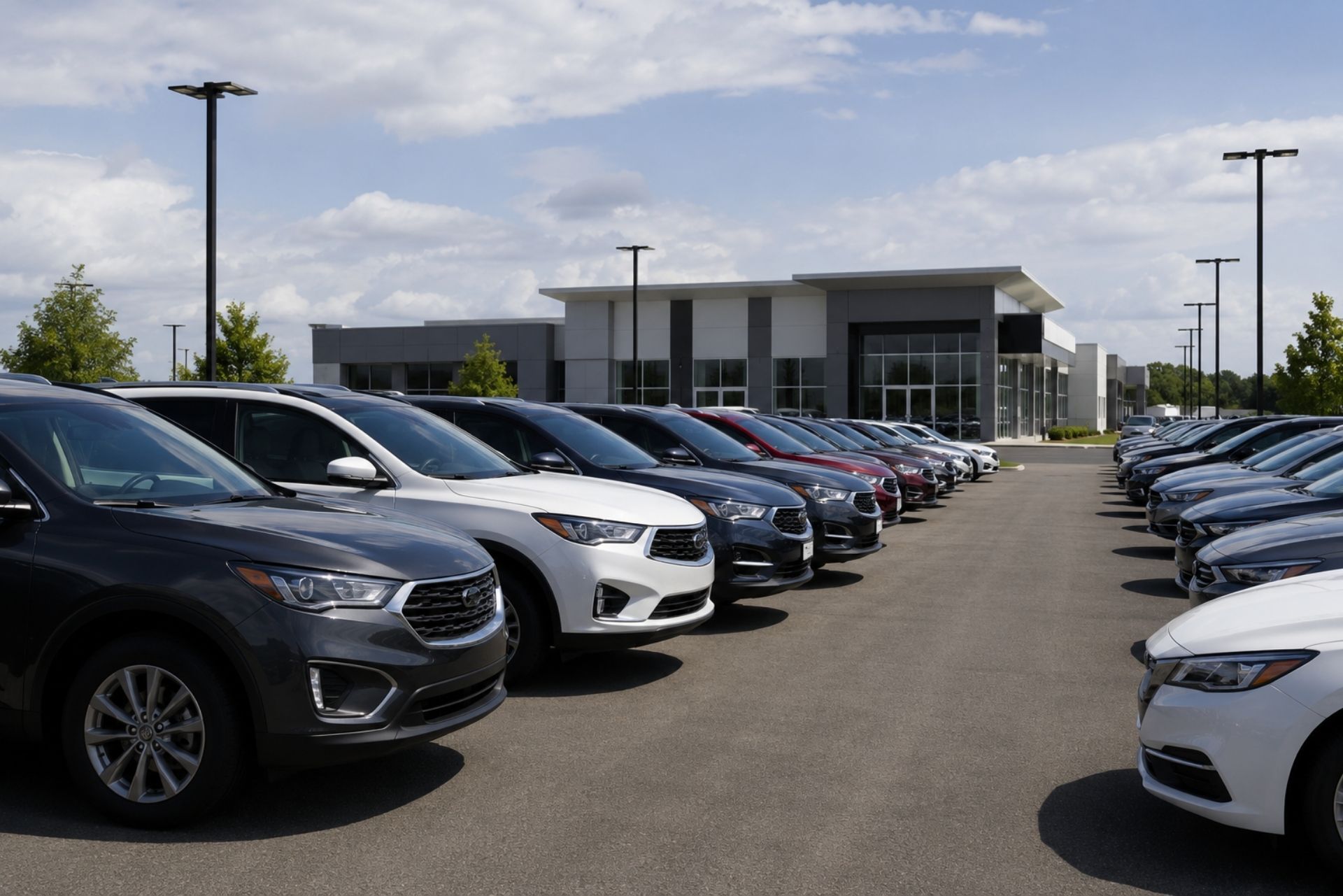
Your inventory is likely your single largest asset. A mid-size independent dealer might have $1.5 million to $3 million worth of vehicles sitting on an open lot at any given time. Dealer's open lot coverage, sometimes called lot insurance or physical damage coverage, protects that inventory against damage or loss.
This policy covers vehicles you own, hold on consignment, or have in your possession for sale. It does not cover customer vehicles in your service bay (that's garagekeepers coverage) or vehicles you've already sold and delivered. The distinction matters because we've seen dealers assume their open lot policy covers everything on the property, only to discover a gap after a storm wipes out half their inventory and three customer cars in the service lot.
Physical Damage Coverage: Collision and Comprehensive
Dealer's open lot policies typically include two types of physical damage coverage. Collision covers damage from vehicle-to-vehicle contact or a vehicle hitting a stationary object, like a lot attendant clipping a row of cars while moving inventory. Comprehensive covers everything else: theft, vandalism, fire, falling objects, and animal damage.
Most policies carry a per-vehicle deductible and a separate, higher deductible for catastrophic events. A typical structure might look like $500 per vehicle for standard claims and $5,000 to $25,000 for weather-related losses. Your deductible choice directly affects your premium, so it's worth modeling out scenarios with your agent. A dealer carrying 200 vehicles with a $1,000 deductible versus a $2,500 deductible could see a premium difference of 15% to 20%.
Protecting Against Weather Extremes and Theft
Severe weather is the number one driver of open lot claims in 2026. Hailstorms in Texas, tornadoes across the Midwest, and hurricanes along the Gulf Coast have made weather-related losses a near-annual event for dealers in those regions. A single hailstorm can damage every vehicle on your lot, generating claims that reach into the millions.
Theft is the second major exposure. Catalytic converter theft has slowed somewhat thanks to new state tracking laws, but whole-vehicle theft from dealer lots
continues to rise in several metro areas. Installing GPS tracking on high-value inventory, upgrading lot lighting, and using bollards at entry points can reduce both your theft risk and your premium. Many carriers now offer credits of 5% to 10% for documented security improvements.
Comparison: Garage Liability vs. Dealer's Open Lot
These two policies serve fundamentally different purposes, and confusing them is one of the most common mistakes new dealers make. Garage liability protects you from claims others bring against you. Dealer's open lot protects your own property. You need both.
A helpful way to think about it: if a customer sues you, garage liability responds. If a tree falls on your inventory, dealer's open lot responds. They don't overlap, and neither one substitutes for the other.
Chart: Key Differences in Coverage, Focus, and Claims
| Feature | Garage Liability | Dealer's Open Lot |
|---|---|---|
| What it protects | Third-party injury and property damage claims | Your vehicle inventory |
| Typical triggers | Test-drive accidents, slip-and-falls, service errors | Hail, theft, fire, collision on your lot |
| Who benefits | Injured third parties (customers, public) | You (the dealership owner) |
| Required by law? | Yes, in all 50 states for licensed dealers | Not always required, but lenders mandate it |
| Average premium range (2026) | $3,500 to $12,000/year for small-mid dealers | $2,000 to $8,000/year depending on inventory size |
| Common deductible | Per-occurrence, typically $1,000 to $2,500 | Per-vehicle, $500 to $2,500; catastrophe deductible separate |
| Covers customer vehicles? | Only if damage results from your negligence | No (need garagekeepers for that) |
Every state sets its own minimum insurance requirements for licensed auto dealers, and they vary significantly. In Texas, dealers must carry at least $25,000/$50,000 in bodily injury liability. California requires a $35,000 surety bond and proof of garage liability. Florida mandates $25,000 in combined single-limit liability for dealers with fewer than 25 vehicles. These are minimums, and they're rarely enough to protect a real business.
Most floor plan lenders require dealer's open lot coverage with limits equal to your total inventory value, plus a maximum deductible they'll accept. If you're financing 150 vehicles through a floor plan, your lender will want proof of coverage before releasing funds. Failing to maintain continuous coverage can trigger a default on your floor plan agreement, which is a fast path to losing your inventory.
State licensing boards also audit insurance compliance. In several states, including Georgia, Ohio, and Virginia, letting your garage liability lapse even briefly can result in license suspension. Keep certificates of insurance current and set up automatic renewal reminders with your carrier.
Common Questions About Dealership Coverage
FAQ: Real Answers for New Dealership Owners
Do I need both garage liability and dealer's open lot coverage? Yes. They cover completely different risks. Garage liability handles third-party claims against your business. Dealer's open lot protects your inventory. Skipping either one leaves a major gap.
Does my personal auto insurance cover vehicles I'm selling? No. Personal auto policies exclude vehicles held for sale or used in a commercial operation. This is one of the most common coverage traps for new dealers running small lots from home.
What happens if a customer crashes during a test drive? Your garage liability policy typically responds first. The customer's personal auto insurance may contribute, but your dealership is usually the primary insured during a supervised test drive.
How much does auto dealer insurance cost for a small lot? A small independent dealer with 30 to 75 vehicles can expect to pay between $5,000 and $15,000 annually for a combined package of garage liability and open lot coverage. Premiums vary by state, claims history, and lot security.
Are EVs more expensive to insure on my lot? Generally, yes. EVs carry higher repair costs and battery fire risks. Some carriers apply surcharges or require specific endorsements for electric vehicle inventory. Ask your agent about EV-specific terms before stocking them.
Can I bundle garage liability and open lot into one policy? Many carriers offer a dealer's package policy that combines both coverages, along with garagekeepers and sometimes business property. Bundling often saves 10% to 15% compared to buying each policy separately.
What's the biggest coverage mistake you see dealers make? Underinsuring inventory. Dealers often set coverage limits based on what they had on the lot six months ago, not what they have today. If your inventory has grown and your coverage hasn't, you'll face a coinsurance penalty at claim time.
Making the Right Choice for Your Dealership
Getting your dealer insurance right in 2026 means treating garage liability and open lot coverage as two halves of the same equation. One protects you from lawsuits. The other protects the vehicles that generate your revenue. Neither one is optional if you're serious about staying in business.
Start by getting at least three quotes from agents who specialize in dealer accounts, not general commercial agents who write one dealer policy a year. An experienced dealer insurance agent will know which carriers offer the best terms for your specific situation, whether that's a high-volume franchise store or a ten-car buy-here-pay-here lot.
Review your coverage limits every quarter, especially if your inventory fluctuates seasonally. Update your carrier when you add a location, start stocking EVs, or change your floor plan lender. The five minutes it takes to make a phone call is nothing compared to discovering a coverage gap after a $200,000 hailstorm claim gets denied. Your dealership's survival depends on getting this right, so don't treat insurance as an afterthought.
About The Author: Andy Roy
As Owner and Agent at Pure Risk Advisors, I’ve spent over three decades helping clients find reliable, affordable coverage they can count on. Licensed in Arizona, Colorado, and Wyoming, I take pride in offering personalized service and practical solutions that fit each client’s unique needs—backed by years of experience and a genuine commitment to my community.
Your Personal Insurance Solutions in Colorado
Our team of experts is dedicated to understanding your unique needs and crafting tailored insurance solutions to safeguard your most valued assets, providing you with the confidence and peace of mind you deserve.
3R Personal Insurance Agency
Why Work With 3R Insurance
Choose 3R Insurance and unlock a world of personalized, expert-driven insurance solutions tailored to protect what matters most to you. Experience unparalleled choice, transparency, and ongoing support as our dedicated agents guide you through your insurance journey, ensuring you receive the best coverage at competitive prices.

Choice & Transparency
At 3R Insurance, our independent agents set themselves apart from traditional insurance company agents by working for you, not the insurer. As independent agents, they have the flexibility to offer a diverse range of policies tailored to your unique needs.

Your Advocate
Our independent agents are committed to providing the best coverage suited for your individual requirements. They work diligently to align your insurance needs with your budget, ensuring you receive top-quality coverage at an affordable price.
Lifetime Expert Advice
With a wealth of industry knowledge, our independent insurance agents are true experts, capable of clarifying complex policies and rate changes. Their extensive experience with multiple insurance providers makes them reliable sources of information, offering invaluable guidance and support throughout your insurance journey. Experience the 3R Insurance difference with our commitment to choice, transparency, and exceptional service.
How To File A Insurance Claim in Colorado
Report the Incident
Promptly contact 3R Insurance to report the incident that led to the need for filing a claim. Provide accurate and detailed information about the circumstances, including the date, location, and any individuals involved. This timely reporting helps ensure the claims process proceeds as smoothly and efficiently as possible.
Gather Documentation
Collect any relevant documentation to support your claim, such as photos, videos, police reports, and witness statements. Organizing this evidence will help strengthen your claim and expedite the evaluation process, allowing our dedicated claims team to assess the situation and determine the appropriate compensation.
Stay in Touch and Cooperate
Keep an open line of communication with your 3R Insurance agent during the claims process. Respond to any requests for additional information or clarification promptly, and be prepared to work closely with our team to ensure a fair and timely resolution. Our goal is to provide exceptional support and guidance throughout the entire claims experience.
Safeguarding What Matters to You with Personal Insurance

Craig C.
Personal Insurance Client
Beth is awesome and brings incredible customer service and a willingness to help with new drivers. I receive and appreciate the emails I find in my inbox about policy renewals. Beth and her team make is easy to connect with and understand my multi-coverage policy.
Rebecca V.
Personal Insurance Client
3R Insurance Agency is the best insurance agency hands down. Customer service is great. They have resolved more issues over the years than I can count. Simply amazing!
Michelle M.
Personal Insurance Client
I have been with 3R insurance for years and have always had great success. Beth Woodward has always been helpful in getting the best insurance and rates for me.